


Please support THE CITIZEN'S VOICE with a donation HERE!

|
|
||
|
||
|
||
|
||
| Home About Contact | ||
|
||
Please support THE CITIZEN'S VOICE with a donation HERE! | ||
|
|
||
School and Startup? A department store becomes a education revolution thanks to legal regulations! School attendance is a duty of parental assistance! Parents in the classroom!Escalators, workspaces, and parents right in the middle of lessons: this school turns everything upside down. What sounds like a future project can become reality and cause amazement, doubt, and major opportunities all at once. 
“Come on, we’re late,” she said to her husband and walked briskly on without looking back. “Which idiot came up with the idea of building a school right in the city center?” he grumbled back. “And then in a traffic-calmed zone, where the next parking spot is miles away.” “That’s not the point right now. They must have had their reasons,” she replied. “And besides, a central location is also an advantage for short school commutes for everyone living in the city center,” she added. “Have you even looked around?” he asked. “Where exactly do you see anyone here with kids? I only see shops, closed shops, offices, and offices for rent,” he summarized his brief impressions. “That’s structural change,” she replied. She slowed down, looked up, and stopped. “Look, there it is!” she said to him. He looked up and fell into thought. “That doesn’t look like a school,” he muttered. “But it says right there in big letters: ‘City Center School and Business’,” she said happily, having arrived. “All these English terms everywhere. In the past, something like this would have been called Franz Kafka School. Today everything is Kafkaesque,” he muttered. “Is that the brother of Markus Kafka from television?” she asked him. “Not quite. They’re not related at all. Franz Kafka lived a hundred years ago. Having a brother there would be a bit difficult, don’t you think?” he asked back suggestively. Without answering his question, she asked: “And you went to Franz Kafka School?” “No, but it could have been called that. A lot was Kafkaesque there, when you think about it,” he replied. “Come on, let’s go in!” she said and pulled him into the building by the hand. They walked through the two glass doors and were astonished. “An escalator in a school?” he asked in confusion, his voice slightly raised. “Has luxury broken out here? I thought school buildings were crumbling everywhere in the country. And here there’s an escalator?” he continued. “Ah!” he said when he saw a ceiling light that had failed. “Now it’s slowly becoming normal.” Meanwhile, she searched the information board for the floor where the administration office was located. They had an appointment with the school management. “There, fifth floor. All the way up,” she said. “As always. The bosses sit at the top,” he muttered again, assuming they would now have to climb stairs. “What are you complaining about?” she asked. “We’ll take the escalator,” she continued. “Luxury City Center School,” he thought aloud and followed her. On the 5th floor, they stood in front of a door labeled “Administration and Rental.” He muttered in surprise: “Can you rent schoolchildren here?” She knocked, and moments later a voice from inside called: “Come in!” They opened the door, stepped in, and a woman in business attire greeted them, extended her hand, and said: “You are Ms. Naumburg and Mr. Naumburg?” “No!” he said. “Not quite. Mr. Naumburg and Ms. Goseck. We haven’t signed anything yet,” he continued. “He means we haven’t said yes yet. We haven’t agreed on the name,” she said. He added: “She would like a double surname. But I would have to take it. That sounds too much like traffic reports on the radio to me. 70 kilometers of traffic jam between Naumburg-Goseck. Avoid the area widely.” “Well then, let me introduce myself first. My name is Cornelia Storkau. I am in charge of management here,” said Cornelia Storkau. “Does that mean it’s called management these days and no longer school administration?” he asked, adding: “And how did you manage to finance an escalator in a school?” “Perhaps I should just show you around the building. That explains everything much better,” Cornelia Storkau replied to Mr. Naumburg. They left the administration office. Cornelia Storkau explained: “On the 5th floor here we have workrooms for group work, meetings, and offices. That works quite well because it’s the quietest area. But let’s go down one floor.” Cornelia Storkau pointed to the escalator. The three of them stepped onto the escalator, and Cornelia Storkau continued: “Of course we know that an escalator in a school is unusual. It’s something of a unique feature here. Many children want to come to our school because of the escalator. But it was already here before this became a school. This used to be a department store. However, the owner could no longer find a tenant after the last department store operator gave up. He couldn’t pay property taxes for several years and was in debt to the city. He then transferred the building to the city and had the taxes waived. As you may have noticed, a lot has changed in schooling in recent years. Parents now have the right to accompany their children in lessons on a permanent basis. The city quickly faced the problem that school buildings were either insufficient or in need of major renovation. In the city council, someone came up with the idea of converting the department store accordingly. It was a very cost-effective solution. Only the open spaces had to be divided into rooms. The sanitary facilities were still an issue. But otherwise there were hardly any difficulties. Ah yes, the escalator: there were also voices saying it should be replaced with a normal staircase. But that would have cost around 500,000 euros. That corresponds to the operating costs of the escalator for 30 or 40 years. So the escalator was left in place, especially since the 500,000 was not available in the budget at the time.” “You said offices. Why are there offices here?” Mr. Naumburg wanted to know. “We have several options. We have three open-plan offices, or ‘workspaces’ as they are called. But offices of different sizes can also be rented,” Cornelia Storkau explained. A little girl came running out of a classroom. Cornelia Storkau called after her: “Slow down, Marie!” Marie called back: “Dad has to help me with math!” Marie opened the next door and called into the room: “Dad, you have to help me with math!” “That’s one of the workspaces,” Cornelia Storkau explained and entered the room together with Ms. Goseck and Mr. Naumburg. “We have 30 desks here for people who don’t need much space and would otherwise work from home. There is a 100-gigabit data line in the building. That makes a big difference compared to home office. Everything runs faster here,” Cornelia Storkau explained. They watched as Marie pulled her father away from his desk and left the room jumping while holding his hand. “What do you actually do for a living?” Cornelia Storkau asked. “He works as an analyst and usually prepares reports. He mostly does that from his desk. I worked in administration and am currently looking for a new job. We have been abroad for the last few years but wanted our son to go to school in Germany. But school is no longer what it used to be,” Ms. Goseck explained. “Everything has improved, at least with us. Participation is the magic word. And cooperation is very important. That’s why we have this concept. Parents are just a few doors away and can always participate in educational work. That means short distances. And it relieves the teachers,” Cornelia Storkau said. “That reminds me…” Cornelia Storkau hinted and looked deep into the room. “Miriam, are you still looking for an administrative assistant?” Miriam looked up and called back: “Yes, with a focus on accounting.” “We’re very informal here. Everyone meets in the cafeteria. Maybe you can talk to Miriam later?” Cornelia Storkau asked Ms. Goseck. “Now I understand the management thing,” Mr. Naumburg interjected and asked: “Do you also rent out the desk workstations?” “You can also rent an entire office if you like,” Cornelia Storkau offered. “That’s why School and Business. You clearly have the business side under control,” Mr. Naumburg replied. “You probably know how municipal budgets are structured—at best barely out of the red. After the recent crises it didn’t get any better. With our concept, the building pays for itself after two years since we started. It has also had a positive effect on the entire city center,” Cornelia Storkau explained. “The parking situation is still suboptimal,” Ms. Goseck said. “The city is working on that. Construction of a parking garage 50 meters from here starts next week. Apart from that, the bus connections before and after school are good. Only in between the intervals are not yet perfect,” Cornelia Storkau explained. “Here is a typical classroom. The children are currently on break,” Cornelia Storkau said. “Traditional frontal teaching is hardly used anymore. We focus on the future: digital boards, digital learning materials. Teachers prepare their content digitally and share it with each other. Cooperation is a top priority here. Students help each other. Teachers have plenty of time for individual support. And many parents are regularly involved. Some students manage the regular curriculum of a school year in half the time. I think that clearly speaks for our concept,” Cornelia Storkau explained. “In addition, as you have already noticed, we have much more calm in the building. Conflicts don’t even arise. If problems occur, they are resolved constructively immediately. The goal is educational success—at each student’s individual pace. Those who need more time to understand something get that time,” Cornelia Storkau continued. By now they had arrived in the cafeteria. “Some probably need a hell of a lot of time,” Mr. Naumburg said, looking toward the tables. Around 20 retirees were sitting there spread out. “Looks almost like it!” said Cornelia Storkau. “The cafeteria is open to everyone. Some students cook and bake here because they enjoy it or find it relaxing. And those are grandparents who regularly come here for lunch and enjoy watching their grandchildren or helping out. It has become an intergenerational meeting place here. Some grandparents also help in lessons. It all works very well,” Cornelia Storkau explained. “But let’s come to your son. That’s why you’re here,” Cornelia Storkau said. “Well, I’m completely overwhelmed,” Ms. Goseck said. “Actually, we were just looking for a good school. Now we’re standing here in a business plan. I think I need to digest that first.” “So I like the workspaces,” Mr. Naumburg said. “You can also rent an office if you like,” Cornelia Storkau continued her sales pitch. “How many square meters are the offices? And what does it cost?” Mr. Naumburg wanted to know. “This all feels a bit too business-oriented to me. Shouldn’t school be more child-friendly, where children interact with each other and…” Ms. Goseck said uncertainly. “Look here,” Cornelia Storkau said and pointed out the window into the courtyard behind the building. Children were playing ball together. Others were drawing with chalk on the ground. “As you can see, everything completely normal,” Cornelia Storkau said. “An office of 20 square meters costs 250 euros warm here—including electricity, heating, and internet connection,” she said to Mr. Naumburg. “What are the contract terms?” Mr. Naumburg asked. “They usually correspond to the time the children attend school here. We currently only rent to parents whose children attend school here,” Cornelia Storkau explained. “At the moment only primary school is located here. But we will expand up to the Abitur. We still have about three floors free. So we could set the lease at 12 years if you want,” Cornelia Storkau said with a wink. “Darling! Sold! I’m convinced by the concept,” Mr. Naumburg said to Ms. Goseck. “We won’t find anything better. We can set ourselves up work-wise here and are only a few doors away from our son—and that’s planned for the next 12 years. Where do we sign?” Mr. Naumburg asked Cornelia Storkau with a wink. “Wow, I need to sleep on that first. I’m not signing anything right now,” Ms. Goseck said, feeling like she had just been run over. “You don’t have to rush anything,” Cornelia Storkau said to Goseck and Naumburg. “Some parents are also overwhelmed by too much proximity to their child and need distance. Your child could attend school here without you working here. That’s no problem. We have very good teachers,” Cornelia Storkau said. At that moment, Miriam came from the open-plan office and said: “I spoke to headquarters. Here is the job advertisement. You can work here at a desk. Everything runs via VPN. Laptop and desk are provided or financed by the company. The salary is 4,000 euros gross. That can certainly still be negotiated—I renegotiated it. You could start on the date of enrollment. Just call them. Phone number and email are on it. I’m now going to the cafeteria break with my little one. See you around.” Parental Duty of Assistance and School AttendanceA child’s school attendance is not solely subject to the organizational and regulatory authority of the school or the federal state. Rather, it is part of parental responsibility and duty, as directly derived from the Basic Law and the German Civil Code.1. Constitutional basis (Art. 6 GG) Article 6 paragraph 2 sentence 1 of the Basic Law states unequivocally: “The care and upbringing of children is the natural right of parents and the duty primarily incumbent upon them.” This provision does not merely establish a defensive right of parents against state intervention, but a binding duty. Parental responsibility is comprehensive and covers all areas of the child’s life. School attendance is an integral part of upbringing and therefore directly covered by Art. 6 GG. The state—including the school—thus only has a supervisory and supplementary function. A general or blanket exclusion of parental involvement or presence in the classroom is not compatible with Art. 6 GG. 2. Civil law specification (§ 1618 BGB) The parental duty is further specified by § 1618 of the Civil Code. It states: “Parents and children owe each other support and consideration.” The concept of support is deliberately broad under the law. It is neither limited in time nor space. The legislator has expressly refrained from excluding certain areas of life—such as school or lessons—from the duty of support. It therefore follows necessarily: If parents consider it necessary to support their child in the school context, this is part of their legal duty. Presence in the classroom constitutes a permissible and legally protected form of such support. 3. No restriction possible under state law School laws, school regulations, and administrative provisions are state law. Article 31 of the Basic Law states: “Federal law overrides state law.” Since Art. 6 GG and § 1618 BGB are federal law, state school regulations cannot restrict or override these duties. Regulations that generally limit or prohibit parental presence in the classroom are therefore legally ineffective insofar as they conflict with federal parental duties. 4. Pedagogical considerations of the school Pedagogical assessments that the presence of parents in the classroom is “detrimental” or “harmful” to the child have no legal priority over parental rights and duties under Art. 6 GG. The decision on how parental support is concretely implemented is fundamentally up to the parents themselves. The state may only intervene in the event of a demonstrable, concrete threat to the child’s welfare. Abstract pedagogical considerations are not sufficient for this. 5. Conclusion A child’s school attendance is part of the parental duty of care and upbringing. Parents are obliged under Art. 6 GG and § 1618 BGB to provide support to their children. This duty may also include continuous presence in the classroom. School or state regulations cannot restrict this duty. The final responsibility for whether and to what extent parents are present in the classroom lies legally with the parents themselves. Author: AI-Translation - Michael Thurm | |

|
| Other articles: |
 | Why the Candles on the Advent Wreath Have Different ColorsA Christmas celebration can be not only contemplative but also enlightening. Just like it was on December 7, 2024, at the Wichtelmarkt in Burgwerben.... zum Artikel |
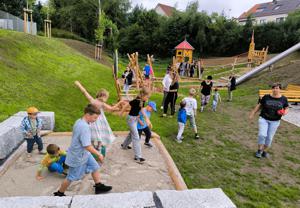 | 245,000 Euros Invested in the Kayna Multigenerational Playground - Now Ready for Romping, Climbing, and PlayingThere has never been a public playground in Kayna where the village’s children could let off steam. Therefore, the city of Zeitz’s playground concept, developed by the city adm... zum Artikel |
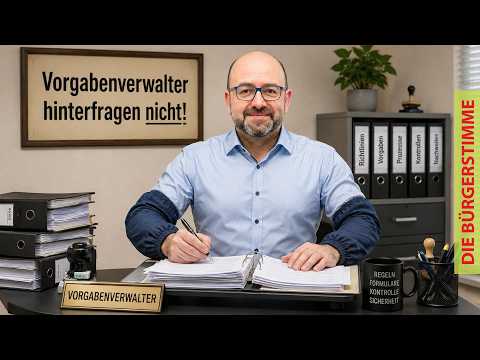 | Mayor Waits for Instructions from Above – No Initiative for Lower District Heating Prices in the Interest of CitizensThe Finance Committee of the City of Hohenmölsen met on May 11, 2026. I used the opportunity during the public question session to ask a question regarding the changed assessment ... zum Artikel |


|
Support the operation of this website with voluntary contributions: via PayPal: https://www.paypal.me/evovi/12 or via bank transfer IBAN: IE55SUMU99036510275719 BIC: SUMUIE22XXX Account holder: Michael Thurm Shorts / Reels / Kurz-Clips Imprint / Disclaimer |