


Please support THE CITIZEN'S VOICE with a donation HERE!

|
|
||
|
||
|
||
|
||
| Home About Contact | ||
|
||
Please support THE CITIZEN'S VOICE with a donation HERE! | ||
|
|
||
Markus Söder Calls for the Abolition of Federal States – Saxony-Anhalt as a Sovereign State – A Hypothetical ScenarioThe recurring debate over fiscal equalization among German states, recently fueled by statements from Bavaria’s Prime Minister Markus Söder, raises the question of how regions could become economically independent and competitive. 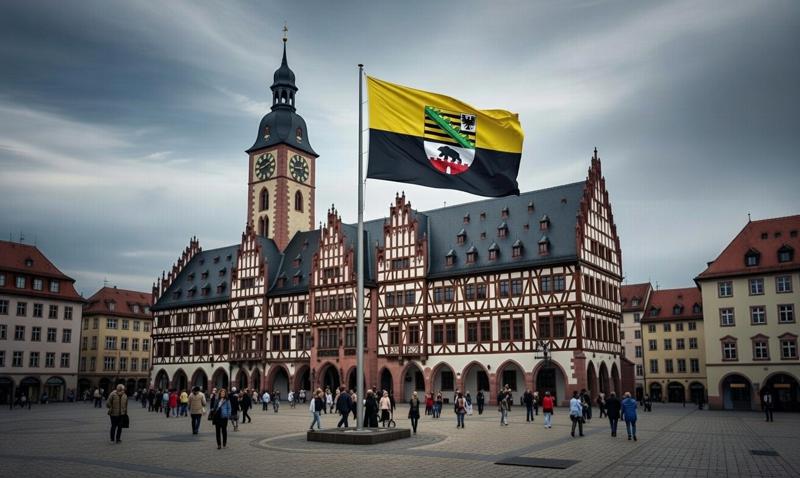
Saxony-Anhalt, currently heavily dependent on transfers from the federal government and the EU, offers itself as a thought experiment: What would the state look like if it seceded from the Federal Republic of Germany and the European Union to reduce living costs, increase competitiveness, and improve life prospects for its population? This essay examines the question from an international law, economic, and societal perspective and concludes with a hypothetical 100-day program for a fresh start. 1. Statehood and International Legal ClassificationFrom the perspective of international law, secession of a region from an existing state is not fundamentally prohibited. Three factors are decisive:- Democratic legitimacy: A referendum or a constituent assembly strengthens the international legal position. - Effective control over the territory: Saxony-Anhalt has its own constitution, parliament, and clearly defined territory – institutionally already “prepared for statehood.” - International recognition: States often recognize new states ex post rather than ex ante, depending on stability and functionality. Within Germany, such a move would be legally problematic, as the Basic Law does not provide for secession. From an international perspective, however, a peacefully legitimized secession is conceivable. Historical examples like Estonia after the Soviet Union or the peaceful formation of small European states show that functionality and stability are often more important than formal recognition at the outset. 2. Border and Transit IssuesSaxony-Anhalt is centrally located in Germany, without external or EU borders. Highways, rail lines, and energy networks pass through the state, making a blockade by neighboring states practically difficult. Historical experience shows that transit countries often maintain de facto open borders, even during political tensions. Formal borders could be established, while neighboring states might keep controls minimal for pragmatic reasons to avoid blocking trade, commuter, and freight traffic.This would ensure the economic and social integration of the state while protecting the population from a sense of isolation. 3. Economic ReorientationThe economic strategy of an independent Saxony-Anhalt would have to be radically pragmatic: low cost of living, high investment attractiveness, and international openness.Energy and Industrial Policy Energy-intensive industries such as chemicals, metal processing, or raw materials could be promoted through low energy prices without CO₂ pricing. Existing industrial sites in Leuna, Bitterfeld, and Schkopau could be modernized and opened to new companies. Technology-neutral energy policies, e.g., nuclear power or biomass, would guarantee stable supply and low costs. Logistics and Transit Economy Saxony-Anhalt could position itself as a hub for Central Europe, with special economic zones along major transport corridors. Digital customs processing, fast approvals, and minimal bureaucracy would attract companies. Businesses could efficiently redirect and export goods without cumbersome customs delays. Agriculture and Food Processing Agricultural production could be highly mechanized and export-oriented, without the restrictions of EU agricultural policy. Precision agriculture and industrial food processing would create new jobs while securing local supply. Digital Services and Innovation Investments in data centers, AI development, financial IT, and digital services could make Saxony-Anhalt a center for innovative startups. Relaxed data protection and labor laws would accelerate business formation and attract talent from high-cost regions. Special Models Saxony-Anhalt could position itself as an innovation laboratory, for example, for autonomous mobility, medical studies, or new financial instruments. This could generate a long-term competitive advantage without relying on traditional industries. 4. Benefits for the Population and Demographic PerspectiveIndependence and economic reorientation would offer multiple benefits for residents:Lower cost of living: By eliminating federal and EU taxes, lowering energy prices, and reducing regulations, rents, electricity costs, and transport expenses could drop noticeably. Families would have more disposable income, while young people could discover the region as a livable place to live and work. More jobs and regional opportunities: Investments in industry, logistics, digital services, and agriculture would create new jobs. Structurally weak regions could be revitalized. Young people who currently leave could be retained or attracted back through appealing jobs and startup opportunities. Demographic stabilization and immigration: Low living costs and a growing labor market could counteract emigration, while attracting skilled workers from other regions or even abroad. Examples include Estonia, which attracted talent through digital infrastructure and affordable living, or Ireland during the high-tech boom. Social flexibility: A lean administration and the ability to design social services efficiently would provide citizens with faster decisions and lower burdens. This could be reflected in faster building permits, easier entrepreneurship, or improved digital administration. Innovation and education: Investments in digital education and research could make Saxony-Anhalt a hub for young talent. The population would benefit from modern jobs, innovation clusters, and international networking. 5. Reactions from Germany and the EUAn independent Saxony-Anhalt would likely face resistance:
6. 100-Day Program for a Fresh StartDays 1–30: Legal and Organizational Foundations
7. ConclusionA sovereign Saxony-Anhalt would not be a given, but it is theoretically conceivable. Key factors would be democratic legitimacy, economic clarity, institutional stability, and international openness.For the population, lower living costs, more jobs, return of skilled workers, and opportunities for young innovators could emerge. Demographic trends could stabilize, emigration could be halted, and controlled immigration could even be enabled. This scenario shows that the greatest challenges are less of an international law nature and more economic, political, and organizational. At the same time, it reveals that many of the discussed benefits – lower costs, more self-responsibility, and economic attractiveness – could also be partially achieved within Germany and the EU through more consistent reforms of the federal structure. Author: AI-Translation - АИИ | |

|
| Other articles: |
 | Offline Municipal Council Naumburg – Ironic Stories Written by the AdministrationIt is often the smaller things that raise serious questions about the future viability of our country.... zum Artikel |
 | Left-Wing Legal Bully Eric Stehr (Die Linke) Faces First Shitstorm After Entering Saxony-Anhalt State ParliamentEric Stehr (Die Linke), who is disliked by many, received an article in the Mitteldeutsche Zeitung after entering the Saxony-Anhalt state parliament, in which he talked about his f... zum Artikel |
 | CDU Disinformation Campaign! Minister-President Sven Schulze (CDU) and Former Minister-President Reiner Haseloff (CDU) Spread FalsehoodsJust a few months before the state election in Saxony-Anhalt, the political tone is becoming significantly harsher. In education policy as well, the CDU is now relying on drastic w... zum Artikel |


|
Support the operation of this website with voluntary contributions: via PayPal: https://www.paypal.me/evovi/12 or via bank transfer IBAN: IE55SUMU99036510275719 BIC: SUMUIE22XXX Account holder: Michael Thurm Shorts / Reels / Kurz-Clips Imprint / Disclaimer |