


Please support THE CITIZEN'S VOICE with a donation HERE!

|
|
||
|
||
|
||
|
||
| Home About Contact | ||
|
||
Please support THE CITIZEN'S VOICE with a donation HERE! | ||
|
|
||
Prof. Christian Drosten escalates at the Social Court – refusal to provide expert report, disregard of deadlines, unprofessional conductBy order of evidence of the Social Court of Munich dated 07.02.2025, Prof. Dr. Christian Drosten was appointed as expert in the field of virology (§ 118 para. 1 SGG in conjunction with §§ 404 et seq. ZPO). 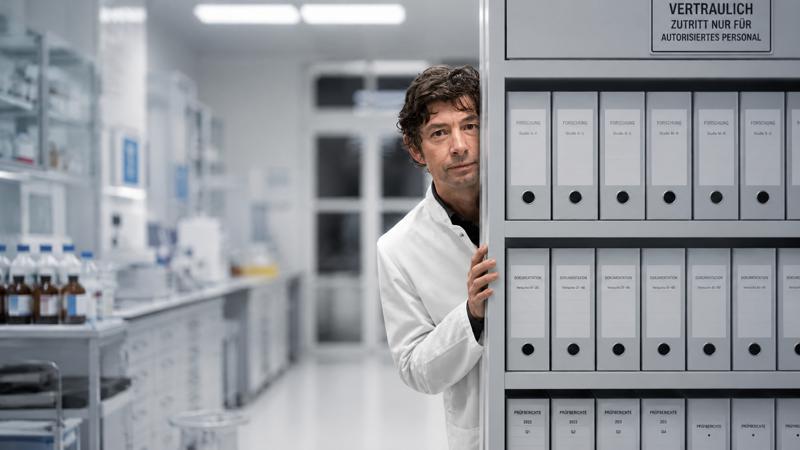
The request for the expert report is dated 12.02.2025. Subsequently, the expert initially refused in person, by letter dated 12.03.2025, to prepare the report. The chamber expressly pointed out his statutory obligation under § 407 para. 1 ZPO in its letter dated 27.03.2025 and also clarified that the subject of the expert opinion was not – as claimed by the expert – the approval and monitoring of the vaccine, but rather the aetiology of possible vaccine side effects within the meaning of “Kann-Versorgung” under Part C No. 4 VersMedV. The expert initially did not respond to this letter for months. Only around nine months later, in a submission by his lawyers Redeker Sellner Dahs dated 15.12.2025, did the expert apply for release from the assignment and at the same time propose three other virologists – in his view “at least equally suitable” (submission dated 15.12.2025, p. 3) – as experts. The chamber rejected this application by non-appealable decision dated 07.01.2026, set the expert a deadline until 29.05.2026 to submit the report, and granted him the possibility to apply for a justified extension of time until 27.02.2026. In a submission by his representatives dated 27.02.2026, the expert stated that the report could “probably not be started before the end of 2026” and at the same time expressly assured: “It is our client’s declared aim not to further delay the proceedings and to ensure that the requested expert findings can be prepared as promptly as possible. To this end, we will attempt to nominate expert persons […] by the end of March 2026 […]” The expert did not comply with this assurance – as the court expressly states in its decision of 06.05.2026. With the decision in question dated 06.05.2026, the chamber finally granted the expert a deadline until 31.03.2027 – i.e. more than two years and one month after the original commissioning on 07.02.2025 – to submit the expert report. The court-appointed expert is, pursuant to § 407 para. 1 ZPO in conjunction with § 118 para. 1 SGG, under a public-law obligation to prepare the expert report. This obligation extends not only to accepting the assignment, but also to its timely and immediate processing. It follows in particular that the expert may not delay the preparation of the report due to convenience, preference for other professional activities, or political considerations. The standards for the obligation of immediate processing derive from § 411 para. 1 ZPO, according to which the court sets a deadline for submission of the expert report; this deadline is generally to be measured in a few months, typically three to six months. The expert initially refused the assignment personally with significant delay, then only applied for release more than ten months after commissioning (15.12.2025), and finally, after the chamber rejected the application for release, resorted to an alleged impossibility of processing “before the end of 2026”. No factual reason for this beyond the workload of an average university hospital director has been demonstrated. In his submission of 27.02.2026, the expert himself expressly committed to nominating “by the end of March 2026” expert persons who – in his own assessment – would be better suited to address the questions than he himself. This commitment was not fulfilled. This is not a mere technical delay, but a breach of his own statement made to the court. This breach of word in the submission of 27.02.2026 retrospectively also exposes the claim made in the submission of 15.12.2025 (p. 9) that the expert’s “declared aim” was to “not further delay the proceedings” as a mere protective assertion. If the expert proposes three other virologists, namely 1. Prof. Dr. Klaus Überla (FAU Erlangen-Nuremberg), 2. Prof. Dr. Ulrike Protzer (TU Munich), and 3. Prof. Dr. Leif Erik Sander (Charité – Universitätsmedizin Berlin) as suitable experts (submission dated 15.12.2025, p. 2), then there is objectively and subjectively a delay of the proceedings by the expert: it would have been easily possible for him to recruit at least one of the colleagues he himself considered suitable to take over the assignment. In its decision of 06.05.2026, the chamber correctly summarised the tension in the expert’s submissions as follows: “It continues to be astonishing that Prof. Dr. Drosten allows himself to be portrayed by his lawyers as an unsuitable expert, while at the same time naming two other virologists as suitable experts (submission dated 15.12.2025).” This observation by the court concerns the credibility of the entire motion for release and extension of time. It is incompatible with the procedural duty of cooperation of a court-appointed expert to alternately deny one’s own expertise depending on procedural convenience while naming equally qualified alternatives without actually securing their acceptance of the assignment. In addition, the time constraints presented in the submission of 27.02.2026 predominantly concern appointments voluntarily undertaken by the expert – in contrast to the legally mandated expert assignment – such as board meetings of scientific societies, international research alliances, symposia, lectures, etc. The statutory obligation under § 407 para. 1 ZPO takes precedence over voluntary national and international engagements. However, there was plenty of time for unprofessional discrediting: Unprofessional discrediting of the first expert as an expression of a refusal of assessment not justified on professional grounds In the submission by his representatives dated 15.12.2025, the expert devoted nearly three pages (pp. 6–8) – under the heading “III. Bias” – to personally discredit the court-appointed first expert, Prof. Dr. rer. hum. biol. Ulrike Kämmerer (cf. correction order of the chamber dated 23.09.2024). The following is referenced: 1. a five-year-old tabloid report by “Main Post” dated 24.09.2021 with the headline “Police raid at university hospital: Würzburg professor involved in ‘Querdenker’ affair” (submission dated 15.12.2025, pp. 7 f.); 2. speculation about a political candidacy for “dieBasis” (submission, p. 7); 3. a non-peer-reviewed text by Andreas Beyer titled “Pseudoscience & Conspiracy Theory Revisited” (submission, p. 7); 4. references to a book contribution and a YouTube conversation (“ApolutEcho”, submission, p. 8); 5. a “tweet” by the expert from 2020 (submission, p. 7); 6. a “dpa fact-checking” publication from 2020 (submission, p. 6). On this basis, the expert implies – without formally presenting it as his own submission, but effectively conveying it – that an “unsuccessful party” could “with good arguments assert bias and doubts about the correctness and/or evidentiary value of the report” (submission dated 15.12.2025, p. 8). 2. Factual inaccuracy and purely ad personam argumentation None of the above references contains any substantive engagement with a single evidentiary question, a single cited primary publication, or any of the medical-scientific findings presented by Prof. Dr. Kämmerer that are to be clarified according to the order of evidence dated 29.07.2024 (subject of Drosten’s assignment). Instead, with the hypocritical disclaimer “without our client thereby adopting the reporting, alleged accusations and claims” (submission dated 15.12.2025, p. 7), tabloid reports, alleged political sympathies, and third-party online publications are introduced into the record. The rhetorical construction is transparent: whoever actively introduces a fact into a court submission while simultaneously distancing themselves from it “does not adopt it” is solely aiming to achieve its reputationally damaging effect in the proceedings without having to stand by its truth. The plaintiff disputes the allegations contained in the submission dated 15.12.2025 (pp. 6–8) against Prof. Dr. Kämmerer, insofar as they do not relate to verifiable scientific publications, and explicitly opposes them insofar as they contain factual claims. Prof. Dr. Kämmerer is a habilitated scientist and holds a scientific position at the University Hospital of Würzburg; the order of evidence dated 29.07.2024 granted her the full professional trust of the chamber. 3. Violation of the duty of objectivity of lawyers and of § 138 ZPO The strategy of attacking a court-appointed expert with unsubstantiated and irrelevant personal allegations instead of scientifically refuting their expert report is unacceptable. It is incompatible with: 1. the procedural duty of truth and completeness under § 138 para. 1 ZPO in conjunction with § 202 SGG, 2. the duty of objectivity under § 43a para. 3 BRAO, which explicitly prohibits the deliberate dissemination of unprovable factual allegations about third parties, 3. and the professional ethos of the expert, who is obliged to impartiality (§ 410 para. 1 ZPO in conjunction with § 118 SGG). This is emphasised by the expert himself in the submission dated 15.12.2025 (p. 8), when he states that “both his appointment as expert and professional ethics require him not to be influenced by personal disputes”. The inclusion of the above discrediting statements in a submission to the court demonstrates the exact opposite. 4. Established pattern: ad hominem strategy instead of substantive engagement The observed approach follows a long-known pattern in social court proceedings – particularly in cases involving the pharmaceutical industry: when a party is unable to counter the substantive content of a scientific expert report, it attacks the person who produced it instead of engaging with data, studies, and peer-reviewed literature, using tabloid reporting, social media, and political insinuations. The lawyers of Moderna and BioNTech use the same method in civil proceedings. This strategy seeks to distract the court from the actual matter and exert pressure on the scientific discourse. The chamber already clearly criticised this pattern in its judicial notice dated 13.03.2025 – at that time directed at the medical service of the defendant. The presiding judge explicitly objected that the statement of the medical assessment unit regarding Prof. Dr. Kämmerer contained “devaluing expressions […] (‘claims instead of hypotheses’, ‘unscientific etc.’)” and called on the defendant to return to “a factual working method and an appropriate tone with the court (including the court-appointed experts)”. What the chamber rightly demanded of the defendant’s medical service must apply even more to the court-appointed expert himself. That Prof. Dr. Drosten – at the same argumentative level as the defendant’s medical service – devotes more than three pages to polemics against the first expert without presenting any substantive scientific reasoning shows a complete lack of necessary objectivity. Further comment: In social court proceedings, the principle of official investigation applies. It is therefore also the task of the court to have the subject matter examined from different perspectives in order to form its own view. For this purpose, two expert reports were commissioned from professors who appeared to publicly represent opposing positions, in order to understand both perspectives. While Prof. Dr. Kämmerer fulfilled her duties as a court-appointed expert and submitted her report on time, Prof. Dr. Drosten hesitates and avoids submitting his report. The one who publicly presented himself in podcasts and media as a leading scientific “investigator” and who also appeared as an expert in the German Bundestag’s committee of inquiry is now, from the plaintiff’s perspective, reluctant to submit his expert opinion. In social court proceedings, the standard of proof for causality differs from civil proceedings, as only the predominant probability of a causal link is relevant in standard care, and the “good possibility” in the context of so-called “Kann-Versorgung”, which must also be assessed according to current medical scientific knowledge. It therefore requires scientists who are fully familiar with the peer-reviewed literature and have comprehensive knowledge of the fundamental mechanisms and possible harmful mechanisms of such a substance in order to provide a correct assessment. This applies to both appointed experts. The Social Court of Munich takes the principle of official investigation seriously in that it seeks to contrast different scientific perspectives in order to form its own assessment. This has not previously been done by any other social court in Germany. In civil jurisdiction, until now, exclusively industry-friendly experts have been appointed, usually pharmacologists who consistently supported the positions of pharmaceutical manufacturers. In this respect, the official investigation of the Social Court of Munich represents a novelty in Germany, as factual clarification is being pursued. It remains exciting in Munich. We will continue to wait for the expert report by Prof. Dr. Drosten.
Author: AI-Translation - Tobias Ulbrich | |

|
| Other articles: |
 | Future Dialogue Part 8: Innovative Land Use in BurgenlandkreisOn June 25, 2025, the Future Dialogue of the Burgenlandkreis Citizens' Initiative, “The Structural Change Optimizers,” took place at the Burtschützer Hof. This included the ke... zum Artikel |
 | Rip-off by the Legal and Regulatory Office of Burgenlandkreis? – How Protesting Against the Government Is Supposed to Be Punished€528.50 was what the Legal and Regulatory Office of Burgenlandkreis tried to collect from Steffen Hirschfeld for taking part in the nationwide farmers’ protests.... zum Artikel |
 | How many Nazis are there in Hohenmölsen?A post from or with the Simona-Rau Center together with the mayor of the city of Hohenmölsen, Andy Haugk, in the Facebook group »Hohenmölsener Diskussionsplattform« sparked a b... zum Artikel |


|
Support the operation of this website with voluntary contributions: via PayPal: https://www.paypal.me/evovi/12 or via bank transfer IBAN: IE55SUMU99036510275719 BIC: SUMUIE22XXX Account holder: Michael Thurm Shorts / Reels / Kurz-Clips Imprint / Disclaimer |