


Please support THE CITIZEN'S VOICE with a donation HERE!

|
|
||
|
||
|
||
|
||
| Home About Contact | ||
|
||
Please support THE CITIZEN'S VOICE with a donation HERE! | ||
|
|
||
The East is Dying Quietly: Poverty, Decay – Eva von Angern’s 2021 Speech: A Critique of Crisis Policy and Its Echo in the PresentOn September 16, 2021, Eva von Angern, then chairwoman of the Left Party parliamentary group in the Saxony-Anhalt state parliament, delivered a speech that ran like a red thread through the political debates on the aftermath of the coronavirus pandemic. At a time when the pandemic had sharply worsened public finances and social inequality, von Angern harshly criticized the coalition government under Minister-President Reiner Haseloff (CDU). Her words targeted the core questions: Who bears the burden of the crisis? How does inflation affect the poorest? And why is genuine solidarity lacking? Five years later, in February 2026, this speech casts a stark light on the ongoing problems in Saxony-Anhalt – a state still grappling with economic stagnation, high poverty, and political polarization. This article critically analyzes the speech and compares it to the current situation to show how prophetic – or naive – von Angern’s positions were. Analysis of the Speech: Optimism versus RealityVon Angern’s contribution was characterized by sharp but well-founded criticism of the financial and social policies of the then coalition of CDU, SPD, and FDP. She began with a metaphor: wishing the sky “sky-blue” does not help with real deficits. Indeed, the coalition agreement still acknowledged a budget deficit, yet von Angern accused the government of leaving financing open-ended. The Corona special fund, she argued, was merely a “small lifeboat anchor” for the coming year, not for the next five. Here an analytical strength becomes evident: von Angern avoided mere polemic and drew on her experience in the finance committee to emphasize long-term risks.Things turn critical with the question “who pays the costs of the crisis?” Von Angern directly targeted the FDP, whose tax concepts – based on studies by the Leibniz Institute for Economic Research – relieved businesses, while Die Linke prioritized low incomes. This highlighted the ideological divide: FDP as the “party of social coldness,” Die Linke as defender of families and single parents. The inflation rate, then nearing 4%, she called “de facto social dismantling” and “destruction of prosperity” for the majority. Here von Angern proved farsighted: she linked economic trends to social consequences without slipping into populism. Another focal point was criticism of the SPD and Olaf Scholz, whom she portrayed as “flirting” with the FDP and the debt brake. Scholz’s praise for the debt brake she saw as betrayal of social justice – a position met with applause during the speech. It became personal when von Angern responded to attacks on her own income: CDU MP Guido Gürth had tweeted that she could not complain about poverty since she earned well. Von Angern cleverly countered that commitment against poverty – especially child poverty – is independent of personal status. “We are committing a crime against an entire generation,” she warned of the consequences of persistent poverty. Finally, a touch of irony: von Angern praised the women’s quota in the cabinet but doubted the minister-president’s ability to deal with “strong women.” The speech ended in a heated exchange with Frank Bommersbach (CDU), who accused her of lacking authenticity. Von Angern remained steadfast: politics is for the people outside, not for colleagues. Viewed critically, the speech was a masterpiece of left-wing rhetoric: it blended facts (inflation, tax studies) with emotion (poverty as shame for children), yet remained partisan. Von Angern ignored her own party’s weaknesses, such as declining election results, and perhaps overstated the debt brake’s role as the sole evil. Nevertheless: her analysis struck the nerve of a society in crisis. The Position of Die Linke in Saxony-Anhalt During the Corona Pandemic: Support with CriticismTo place Eva von Angern’s speech in a broader context, it is worth examining the stance of the Left Party parliamentary group in Saxony-Anhalt during the pandemic. The party largely supported measures to “contain the virus,” but early on emphasized the need for social compensation mechanisms and criticized the state government’s implementation. As early as 2021, Die Linke demanded that essential Corona rules be debated and decided in parliament to ensure democratic legitimacy. Eva von Angern herself accused the government of “freezing” parliaments and ruling by decree, calling it a major mistake. The group also criticized unclear communication and lack of crisis preparedness, as highlighted in 2025 debates.Despite this support, Die Linke faced internal and external criticism: the party, for example, held party congresses despite endorsing strict measures, which was seen as contradictory. Later, in the review phase, Die Linke called for consequences for “pandemic mistakes,” such as the insufficient involvement of the state parliament. In contrast to current debates in alternative circles portraying the measures as excessive – citing evidence such as the RKI protocols – Die Linke positioned itself here as a constructive critic: accepting the measures while pointing out social and democratic deficits – an attitude that echoes in von Angern’s speech. Comparison with the Situation in Saxony-Anhalt in 2026: Continuity of ProblemsFive years later, in February 2026, much of von Angern’s criticism has proven true – yet the political landscape has shifted dramatically. The economic situation in Saxony-Anhalt remains stagnant: companies view 2026 pessimistically, burdened by high energy prices, rising costs, and bureaucracy. The hoped-for upswing in 2025 failed to materialize, investments are postponed, and the labor market is stable only demographically – not through growth. The Corona special fund, which von Angern criticized as short-term, did not actually help long-term; instead, the state issued a billion-euro bond in 2026 to secure liquidity. The question “Who pays the costs?” still echoes: although the crisis is over, its consequences burden the weakest.Poverty in particular, the core of von Angern’s speech, remains alarmingly high. In Saxony-Anhalt, 22.3% of the population is at risk of poverty – more than twice as high as in Bavaria. Child and youth poverty stands at 24.8% among those under 18 (2023), and young adults are affected at 32%. Nationally, the poverty risk rose to 16.1% in 2025, yet Saxony-Anhalt suffers disproportionately. Die Linke continues to demand measures such as bans on power cut-offs, underscoring von Angern’s focus on single parents and children. Here her warning of “crime against a generation” proved accurate: studies by welfare associations confirm the shame and hardship von Angern described in 2021. Inflation, at 4% in 2021, has fallen: in January 2026 it stands at 2.1% in Germany, driven by food and services. Nevertheless, it remains a “destruction of prosperity” for low earners, as von Angern predicted – especially in a state with stagnant economy. Core inflation at 2.5% shows persistent pressure. Politically, the change is dramatic: state elections on September 6, 2026, are approaching, and the AfD leads polls with up to 39%, while the CDU stands at 27% and Die Linke at 13%. Sven Schulze (CDU) has been minister-president since January 2026, but fear of an AfD government is growing – raising concerns about economic damage. Von Angern’s criticism of the SPD and FDP as “socially cold” sounds ironic today: Die Linke is weakened, while the AfD populistically capitalizes on poverty and crises. Women in the cabinet? Diversity has at least increased, yet dealing with “strong women” remains an issue in a polarized arena. The Speech of Eva von Angern (Die Linke) on 16.09.2021 Thank you very much, Mr. President. – Ladies and gentlemen, Members of Parliament! Mr. Minister-President, sometimes I too wish, when the weather is really bad, that the sky were sky-blue. But honestly – I sat long enough in the finance committee; Mr. Heuer can confirm that –: sky-blue, glossing over, or even optimism do not help concretely in financial consultations. If there is a deficit – at least your coalition agreement still admits to that – then the money must be found. Honestly: the Corona special fund may help us with a small part next year. It is a small lifeboat anchor, but it clearly does not help this state in the next five years. (Applause) For months you have remained indebted with the answer to the question: Who pays the costs of the crisis? When it comes to who pays the costs of the crisis, I naturally go straight to the FDP. Given your concern about my fear that we might fail the five-percent hurdle in the Bundestag, I find it quite remarkable how much time you devoted to us in your speech. But perhaps briefly on the tax concepts. If you perhaps do not believe my statements, take a look at the analyses of the Leibniz Institute for Economic Research at the University of Munich. It has very clearly shown who in this state relieves whom with which tax concept. (Applause) That is precisely the clear difference between FDP and LINKE: you relieve businesses and we relieve low incomes. We are precisely concerned with families and single parents. Perhaps read it or continue to confirm the image of the party of social coldness. If we look further at the inflation rate, which is already close to 4%, we can all answer who will pay the costs. That – I can tell you very clearly – cannot be done with LINKE; because that is de facto social dismantling and a clear destruction of prosperity for most people here in Germany. That is why there is a very clear difference between you and us. (Agreement) Perhaps one more sentence about Dr. Pähle. I would like to believe you that Olaf Scholz is good and kind. But the truth is concrete. It was not long ago that he clearly committed himself again to the debt brake and the EU Stability Pact and even praised the FDP for its debt brake. You remember the debates we had about the debt brake. He said very clearly: no reform is needed. – That is more than just flirting with the FDP. That is why I will say it exactly as I see it: from my point of view, anyone who votes for the SPD in the Bundestag election now is not choosing the guarantor of social justice in our country. (Applause) I noted with interest that colleague Gürth, referring to my income – which, incidentally, corresponds to that of all parliamentary group chairpersons – tweeted that I complain about poverty in the state. The subliminal message – he may contradict me – is that I should not do that here because I earn well. It may not fit your worldview. But of course – I promise you – I will continue to do so regularly, I am very committed to people living in poverty, especially children and young people. We are committing a crime against an entire generation if we continue to allow so many children in our country to have to live in poverty and be affected by it. I will never accept that. (Applause) Finally: Mr. Borgwardt, I heard your heartfelt desire for praise from me. I can tell you: first of all, I naturally found it nice that I did not have to repeat the quote from the “Volksstimme” today. There was hidden praise in it. I actually think it is good that we now have so many women in the cabinet here in Saxony-Anhalt. But I can also tell you: the experience here in the state parliament of Saxony-Anhalt with the minister-president, but also my personal experience, has confirmed to me that he does not find it at all easy to deal with strong women. So I am curious to see how this will work in the cabinet in the future. (Applause) Vice President Wulf Gallert: Ms. von Angern, I hope you are finished. – Yes, you are finished; you must accept that now. I just want to say briefly: for this subsequent intervention there are still three minutes for the initiator of the current debate. We have already gone a bit over. Therefore – I unfortunately have to say, Ms. von Angern – your contribution is now ended. I also see no further follow-up questions. Then we have actually reached the end of the debate. (Call) – Mr. Bommersbach. Oh, I really overlooked that. Sorry! – Do you want to reply? (Eva von Angern, DIE LINKE: Yes!) – Of course. Then go ahead, Mr. Bommersbach. Frank Bommersbach (CDU): Ms. von Angern, you will surely agree with me that it sounds different when one starts from your family income, which is a secure income, than when one compares it to the income of someone living on Hartz IV and having completely different worries. I already find it very courageous if you want to put yourself in the position of someone with income from the second category. But let the voters decide personally how they feel about you, especially since you are of course right that all parliamentary group chairpersons have the same income. Thank God! (Call) Eva von Angern (DIE LINKE): May I respond to that? Vice President Wulf Gallert: You may respond. Eva von Angern (DIE LINKE): Mr. Bommersbach, it does not matter whether I have experienced poverty or am experiencing it when I stand up for people in poverty. (Applause) To that I can only say: Yes, for someone like me it was easier to combine homeschooling and home office. But fortunately – that is the reproach I make to you – we know from many studies by welfare associations, but also from universities and colleges, how people in poverty live, how single parents in poverty live, how children and young people live, what shame they experience every day. So assume that I will continue to name it here again and again. If I annoy you with that – I don’t care. Because I do not make politics for you, but for the people out there in Saxony-Anhalt. (Agreement – Unrest) Vice President Wulf Gallert: Mr. Bommersbach, since you have not yet exhausted your speaking time of two minutes, you have the opportunity to ask one more short second question. Frank Bommersbach (CDU): Thank you very much, Mr. Chairman. – I take note that you spoke about something from which you are very far removed. Vice President Wulf Gallert: I did not hear a question. Ms. von Angern does not want to respond to it. That is how I understood it; all right, that’s okay. Let us try to maintain the separation between question and intervention, which is not quite so simple. Author: AI-Translation - АИИ | |

|
| Other articles: |
 | Showdown: Left-wing Antifascists vs. Antifascist Government Critics in Bad DürrenbergIs a showdown coming to Bad Dürrenberg on April 28, 2025? A counter-protest has already been called for 5:30 PM.... zum Artikel |
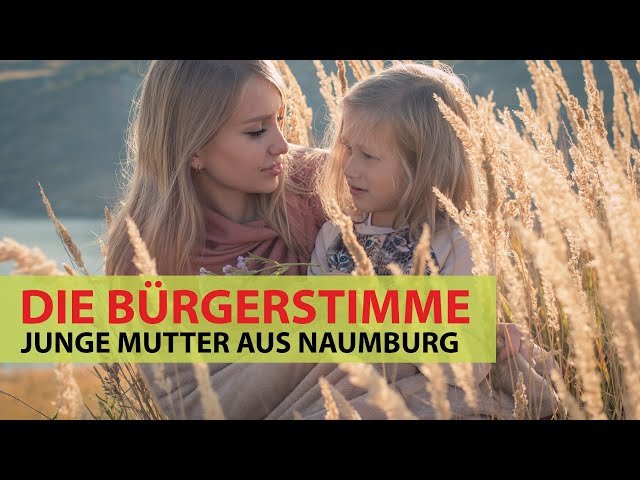 | A Young Mother from NaumburgA submission from a young mother from Naumburg (Burgenland district) with her thoughts on the measures and the pandemic.... zum Artikel |
 | The Great Fear of Halting Germany’s De-IndustrializationA great fear is making the rounds online! The catastrophe is imminent! Yes, total catastrophe! The federal government wants to destroy deindustrialization!... zum Artikel |


|
Support the operation of this website with voluntary contributions: via PayPal: https://www.paypal.me/evovi/12 or via bank transfer IBAN: IE55SUMU99036510275719 BIC: SUMUIE22XXX Account holder: Michael Thurm Shorts / Reels / Kurz-Clips Imprint / Disclaimer |