


Please support THE CITIZEN'S VOICE with a donation HERE!

|
|
||
|
||
|
||
|
||
| Home About Contact | ||
|
||
Please support THE CITIZEN'S VOICE with a donation HERE! | ||
|
|
||
Urban Development by Handshake? A Critical Analysis of Weißenfels’ Approach to “Dilapidated Properties”When urban development is decided by handshake, transparency, equal treatment, and democratic oversight fall by the wayside. The case of the Weißenfels Ritterstuben shows how decisive administrative action, economic power, and political staging intersect – and why this very approach must be critically questioned. 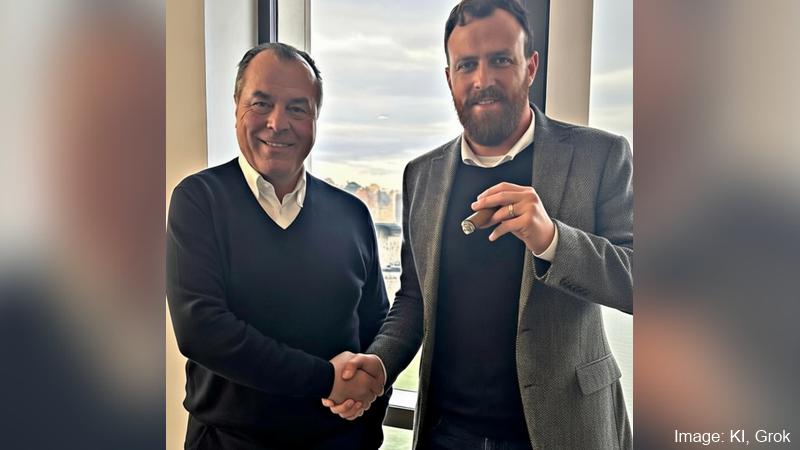
An Analytical Look at Power, Procedures, and Urban Policy in WeißenfelsThe latest Facebook post by the city of Weißenfels on dealing with so-called dilapidated properties marks a notable point in local urban development policy. It presents itself as a success story of decisive municipal leadership, economic cooperation, and seemingly unavoidable toughness against delinquent owners. Yet a closer look raises fundamental questions – about the rule of law, transparency, equal treatment, democratic oversight, and the long-term consequences for the city and society.1. The Narrative of Consequence – Success Story or Political Framing?The post follows a clear dramaturgy: on one side, a strong-willed city leadership that “acts tough and decisively,” on the other, a negligent owner whose failure ultimately leads to foreclosure. The savior finally emerges as a wealthy entrepreneur who – according to the narrative – takes responsibility out of loyalty to the city.This portrayal feeds classic political narratives: order versus decay, capability versus inaction, economic strength versus structural weakness. However, what stands out is that complex contexts are heavily simplified. It remains unclear what options the original owner truly had, how proportional the measures were, and whether alternative solutions were seriously considered. 2. Monument Protection Law, Compulsory Fines, and Foreclosure – Legally Correct, Politically Problematic?Formally, the city’s approach may be legally justified: heritage preservation orders, fines, and substitute measures are legitimate instruments. Yet legality alone does not answer the question of appropriateness.Particularly critical is the impression that the escalation of measures did not solely serve to save the monument but was deliberately aimed at enabling economic exploitation by a new, preferred owner. The fact that costs for substitute measures on another property were registered in the land register of a second building raises questions about proportionality and strategic intent. The shift from regulatory action to de facto expropriation through economic pressure is fluid – and politically highly sensitive. 3. Stakeholder Management or Selective Urban Development?Especially revealing is the mayor’s open description of the strategy. The city explicitly targets “wealthy and reliable entrepreneurs” to be actively involved in residential construction.This openness is candid – but problematic. It raises the question: What role do citizens, local small property owners, cooperatives, or social organizations play in this strategy? Urban development is not understood here as a democratic negotiation process, but as a controlled cooperation between city leadership and economic elites. The selection of “stakeholders” appears informal, personal, and based on economic clout – not on transparent, public criteria. 4. The Handshake as Political Symbol – Beyond Democratic Oversight?Particularly troubling is the emphasis on a handshake on the town hall balcony as the basis of collaboration. This image symbolizes a political understanding that relies on personal trust rather than institutional procedures.In a democratic rule-of-law state, urban development strategies should:
A handshake does not replace a formal procurement process, political debate, or long-term strategy. Instead, it reinforces the impression of informal power concentration, where personal networks matter more than formal processes. 5. Dependence on Major Entrepreneurs – Sustainable Solution or Structural Risk?That Clemens Tönnies acts as an investor is portrayed as a stroke of luck. Yet here lies a structural problem: the city knowingly creates dependence on individual major actors.What happens if:
Urban development that relies on occasional interventions by wealthy individuals is not a sustainable strategy, but a risky model that further concentrates social and economic power. 6. Housing for Whom?Finally, a central question remains unanswered:Who is this new housing actually for? Seven apartments with castle views and retail units suggest a high-end segment. Whether this truly meets the housing needs of Weißenfels residents or primarily serves as symbolic enhancement of specific downtown locations remains open. Urban development should not focus solely on aesthetic upgrades and investor interests, but must consider social diversity, affordability, and long-term usability. Efficiency Does Not Replace LegitimacyThe Ritterstuben case shows that decisive administrative action can produce visible results. Yet it also reveals a political mindset that prioritizes efficiency over transparency, economic power over social diversity, and personal arrangements over democratic processes.The crucial question is therefore not whether renovation takes place – but how, by whom, and under what conditions. Sustainable urban development requires more than tough measures and strong investors: it needs rules, public participation, and social responsibility. Weißenfels thus exemplifies a challenge familiar to many municipalities – one for which there are no simple answers. Precisely for this reason, the debate should not end in Facebook posts, but be conducted openly, critically, and democratically. The Facebook Post from Weissenfels.deIn the fight against dilapidated properties in Weißenfels, Mayor Martin Papke acts tough and decisively. This topic also came up at a meeting with entrepreneur Clemens Tönnies on December 4, 2025, in Rheda-Wiedenbrück. As co-owner of the Tönnies Holding Group, he himself will be a key pioneer. Clemens Tönnies acquired the Ritterstuben at Große Burgstraße 4 and the adjacent vacant lot at Große Burgstraße 6. The well-known Weißenfels Baroque townhouse is to be renovated and complemented with a new building. In addition to two retail units, seven apartments with castle views will be created. The entrepreneur commissioned one of Germany’s most renowned architectural firms: Schwarz & Sturmat Architecture and Engineering PartGmbH from Halle (Saale), which also managed the renovation of the Weißenfels Town Hall. Construction is planned to begin in 2026.
Author: AI-Translation - АИИ | |

|
| Other articles: |
 | The Rule of Law Consists Solely of Legal Tricks – The Case of Julia Neigel vs. the Free State of SaxonyDo you still believe in the rule of law? In an independent judiciary that protects citizens from state overreach? Forget it. The case of musician Julia Neigel against the Free Stat... zum Artikel |
 | Mask Fetish, Lockstep Conformity, and Testing Mania – Reminiscing with District Administrator Götz Ulrich (CDU)Ah, what a glorious hour of German administrative craftsmanship! Today, on May 26, 2026, we look back with the utmost admiration on the digital press conference held by the highly ... zum Artikel |
 | CDU and AfD exclude SPD, Greens and Left from electionA decision by the election committee sparks heated debate. According to media reports, CDU and AfD jointly voted to exclude candidates from the SPD, the Greens, and the Left from p... zum Artikel |


|
Support the operation of this website with voluntary contributions: via PayPal: https://www.paypal.me/evovi/12 or via bank transfer IBAN: IE55SUMU99036510275719 BIC: SUMUIE22XXX Account holder: Michael Thurm Shorts / Reels / Kurz-Clips Imprint / Disclaimer |