


Please support THE CITIZEN'S VOICE with a donation HERE!

|
|
||
|
||
|
||
|
||
| Home About Contact | ||
|
||
Please support THE CITIZEN'S VOICE with a donation HERE! | ||
|
|
||
Disinformation from the SPD Ministry: How Armin Willingmann Feeds Citizens Fairy Tales About Gas SupplyOutgoing Minister Armin Willingmann (SPD) stands in front of the camera, smiles reassuringly, and paints a rosy picture of the coming heating season. 
In his Facebook video and accompanying post dated October 19, 2026, he wants to convince the people of Saxony-Anhalt that there is nothing to worry about: storage levels are sufficient, suppliers are reliable and diverse, and everything is under control. 44 percent comes from Norway, more than 22 percent each from the Netherlands and Belgium, and around 10 percent is LNG from the United States—and there you have it, a picture-perfect world. But anyone who looks more closely will recognize what is really going on: figures are being juggled, dependencies concealed, and the bitter reality swept under the rug. A classic diversionary tactic by a politician who refuses to admit the consequences of years of energy policy. The 60 Percent Lie and Last Winter's Weather MiracleWillingmann admits it: in previous years, storage levels were around 75 percent at this time, compared with roughly 60 percent now. "But is that dangerous?" he asks rhetorically—and promptly answers no. The reality looks different. As of mid-October 2026, German gas storage facilities are around 61 percent full—well below last year's level of approximately 75–76 percent and far short of the statutory target of around 70–80 percent by November 1. Experts and even the Federal Network Agency expect levels to be very low by the end of winter. The federal government has already had to instruct SEFE to purchase and inject additional gas into storage.And what about the last winter, 2025/26? Storage levels plunged to historically low levels of around 20–21 percent by early March. Only the relatively mild March weather saved supplies from a critical shortfall. Had the cold persisted, there would not have been enough gas—that is the conclusion drawn by analyses from the storage industry association INES and other observers. Willingmann does not mention this at all. Instead, he offers yet another soothing formula: supply is "broadly diversified" and "secure." "Gas from the Netherlands and Belgium"—The Great Transit DeceptionThe height of the disinformation: Willingmann proudly lists 44 percent from Norway, more than 22 percent each from the Netherlands and Belgium, and around 10 percent in US LNG. Even the figures do not add up to 100 percent. On the FAQ page of his ministry, which he promotes in the video, the numbers are adjusted somewhat: Norway 44.8 percent, the Netherlands 20.3 percent, Belgium 22.5 percent, German LNG terminals 12.2 percent, plus domestic production and biogas. Still embarrassingly imprecise.Worse still, the "deliveries from the Netherlands and Belgium" do not represent Dutch or Belgian gas sources. The Netherlands has long been unable to meet its own demand through domestic production alone. After the closure of the Groningen gas field, the country produced only around 8.1 billion cubic meters in 2025—barely 27 percent of its own consumption of approximately 30 billion cubic meters. The rest comes from imports (Norway, LNG, and other sources). Much of what Germany receives "from the Netherlands" is Norwegian pipeline gas or regasified LNG that is merely transported through Dutch and Belgian networks and terminals. Belgium itself produces hardly any gas at all. Willingmann presents transit routes as "reliable suppliers"—as if you mistook the mail carrier for the sender. Dutch gas storage facilities fell to extremely low levels during the winter of 2025/2026, reaching historic lows. Around April 1–2, 2026, Dutch storage levels dropped to 4.52 percent. The Netherlands will not be coming to the rescue if there is a gas shortage. The ministry's FAQ indirectly admits as much: "Some of the imported volumes—around one quarter—are forwarded to other countries." And LNG from the United States and elsewhere does not just arrive at German terminals; it also lands in neighboring countries and flows onward from there. The much-touted "diversification" is, in reality, a complicated dependence on Norwegian gas, expensive US LNG, and global market prices—which have already exploded due to the Iran conflict and the closure of the Strait of Hormuz. The FAQ Page: Plenty of Words, Few Answers to the Crucial QuestionsWillingmann proudly points to the FAQ at https://lsaurl.de/Kou4g3 (or the MWU website). But anyone who reads the questions and answers will quickly notice that the critical issues are artfully sidestepped. There are reassuring statements about "stable supply" and a "low risk" of a shortage. The low storage levels are acknowledged, but then played down with the explanation that everything depends on the interaction between imports, storage, and demand. What is missing?
Putting a Rosy Spin on Things Instead of Telling the TruthArmin Willingmann's video and post are not an attempt to inform the public; they are political tranquilizers. The figures are incomplete and misleading, the origin of the gas is presented in a more favorable light than warranted, and the risks of a cold winter are swept aside. Last winter showed just how thin the safety net really is—and only the weather saved us. Storage facilities are currently even less full, prices are high, and the "outgoing minister" is spinning fairy tales about a broadly diversified, reliable supply.Anyone who tries to convince citizens that 22 percent "from the Netherlands" represents genuine Dutch security of supply, when the country itself depends on imports, is engaging in disinformation. The FAQ page fills the gaps with empty platitudes instead of providing clear answers. The energy policies of recent years have made us more vulnerable and driven up costs—and now all of that is supposed to be brushed aside with cheerful video clips and a little statistical sleight of hand. The heating season is beginning. Citizens deserve facts, not empty reassurances.
Author: AI-Translation - АИИ | |

|
| Other articles: |
 | Pensioners Have Lived Like Fat Cats Long EnoughIt’s time to finally speak the uncomfortable truth: The pensioners of this country have lived off the public’s expense for far too long, enjoying a life of luxury while the you... zum Artikel |
 | Confusion Surrounding the JVA Information Event: Location and Time Suddenly ChangedThe informational event about the planned Sandberg correctional facility (JVA) in Langendorf is already sparking discussions – not only because of the topic itself, but also due ... zum Artikel |
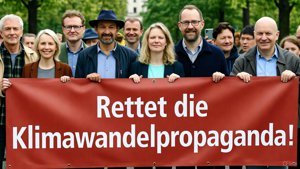 | The Climate Change Propaganda Protectors only protect the climate when they are told toClimate change — everyone knows it, because it’s explained to us daily — is man-made. Oh yes, it couldn’t possibly be otherwise. The CO₂ produced by humans, because they ... zum Artikel |


|
Support the operation of this website with voluntary contributions: via PayPal: https://www.paypal.me/evovi/12 or via bank transfer IBAN: IE55SUMU99036510275719 BIC: SUMUIE22XXX Account holder: Michael Thurm Shorts / Reels / Kurz-Clips Imprint / Disclaimer |