


Please support THE CITIZEN'S VOICE with a donation HERE!

|
|
||
|
||
|
||
|
||
| Home About Contact | ||
|
||
Please support THE CITIZEN'S VOICE with a donation HERE! | ||
|
|
||
Where Are We Supposed to Go? - The Political Controversy Surrounding Young People in Reichardtswerben and the Far Too Expensive Outdoor Facility of Mayor Martin Papke (CDU)How a village square in Reichardtswerben became a symbol of conflict – and why many young people eventually felt unwelcome in their own hometown. A report on complaints, controls, political promises, open questions, and the astonishing question of how young people could suddenly become a problem. 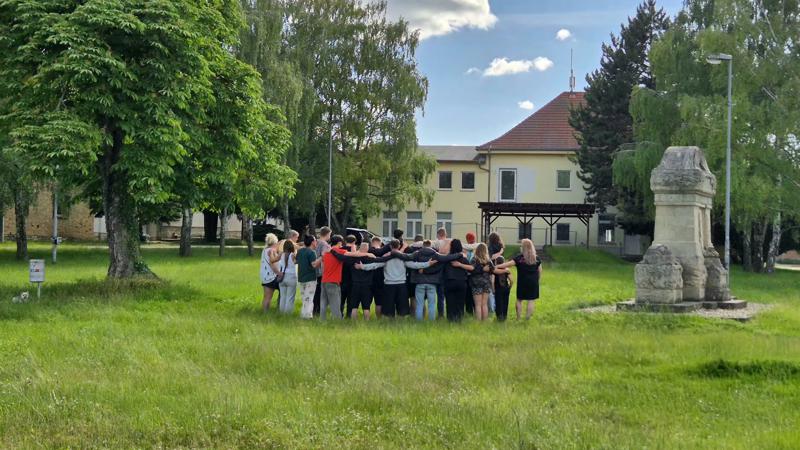
For generations, the village square in Reichardtswerben was a meeting place for young and old alike. A village square that didn't bother anyone for decadesFirst there was no youth club. Then the village square became a problem. And eventually an uncomfortable question arose: Where exactly are we supposed to put our own youth?There are villages that complain about rural flight. There are municipalities that wonder why fewer and fewer young people stay. And there are places that invest a lot of money to keep their youth. Reichardtswerben seemed at times to have taken a different path. Because the conflict there did not begin with violence, not with crime, and not with devastated streets. It began with young people. With young individuals doing what generations before them had also done: sitting together, talking, laughing, and spending their free time with one another. Precisely at a place that had not bothered anyone for decades. To outsiders, it was perhaps just a patch of grass between the houses. For many people in Reichardtswerben, however, it was a piece of home. Friendships were formed here, memories were created, and village community was lived. This is precisely why many of those involved still find the later development difficult to comprehend. Because neither in Reichardtswerben nor in the neighboring Tagewerben does a youth club or comparable leisure facility exist. A remarkable starting pointFirst there is no meeting place. Then the village square becomes a problem. And eventually people wonder why young people withdraw.As early as August 2024, the young people themselves sought a conversation with the local councilors of Reichardtswerben and Tagewerben. They wanted to present their perspective, clear up misunderstandings, and above all achieve one thing: to be heard. They demanded no special rights. No privileges. No exceptions. They simply wanted what generations before them had also had: A place. But a permanent solution did not emerge at first. Instead of talking to each other, many young people increasingly gained the impression that people were mainly talking about them. The conflict was still manageable. Neighbors had not yet become opponents. But the real turning point was not long in coming. When young people suddenly became "rowdies"A single word was enough to turn a neighborhood conflict into a debate about an entire generation. On January 18, 2025, the dispute first reached a wider public.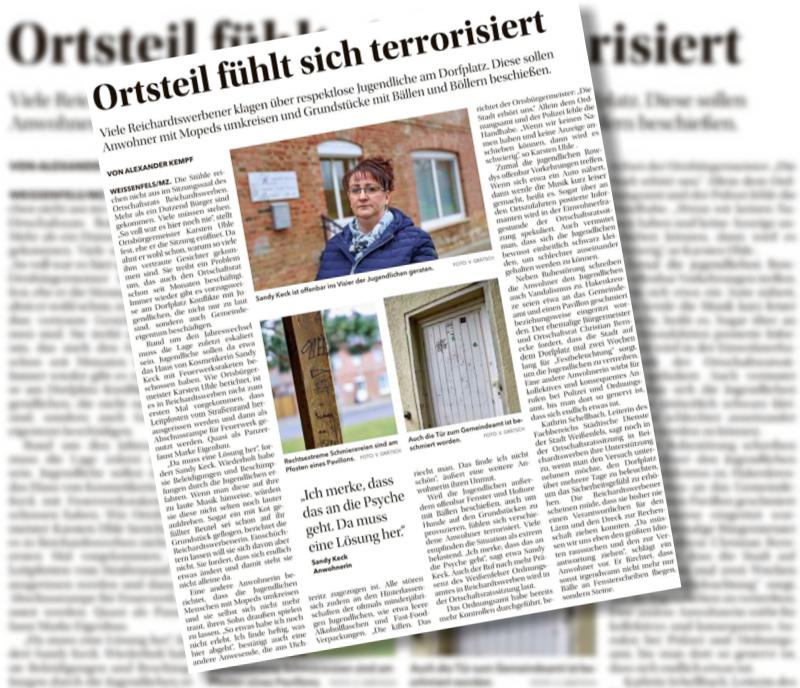
With the public reporting, a local conflict became a topic for the entire region. For many young people, it was not decisive that residents expressed complaints. Complaints are part of neighborhood life. What was decisive was rather the way they were spoken about. In addition, according to their own account, many young people had no knowledge of any specific accusations against them up to that point. All the greater was the surprise for numerous affected individuals when they suddenly found themselves confronted with public attributions. One word has remained in many people's memories to this day: “ROWDIES”A remarkable word. Because a rowdy is not simply a young person. The Duden describes a rowdy as a person who behaves rudely and recklessly. Colloquially, the term stands for troublemakers, brawlers, or people who deliberately disturb others. It is not a neutral word. It is a judgment. This is precisely why many young people found this label particularly hurtful. Because with a single term, many of those affected suddenly gained the impression that no distinction was being made between individual incidents and an entire generation. One further sentence in particular was to shape many young people permanently. The police and regulatory office were to be called again and again, “until they are annoyed and finally do something.” A remarkable form of conflict resolution. While elsewhere people discuss youth participation, volunteer work, and the future of rural areas, in Reichardtswerben a different question seemed temporarily more important at times: How do we get rid of the young people again? For many young people, this very moment marked a break. They no longer felt like a natural part of their hometown. But increasingly like a problem. Complaints turned into mistrust. And neighbors became opponents. Calling the police until something finally happens?Complaints became operations. Operations became mistrust. And eventually some young people felt suspicious simply because of their presence. What followed the newspaper article shaped the conflict for months.According to accounts from young people and parents, there were repeated operations by the police and regulatory office. Sometimes several times on a single day. Often long before the start of the statutory night-time quiet period. For many young people, this was where a gradual loss of trust began. Not in rules. Not in laws. But in the way they were treated. Because more and more often, many of those affected gained the impression that it was no longer a specific behavior that was the focus, but their mere presence. Anyone sitting on the village square had to expect at any time to be checked, spoken to, or asked to leave. For some young people, their own hometown gradually became a place of constant justification. Under observation in one's own hometownWhen young people eventually develop the feeling of becoming a problem simply by their presence: Many young people retrospectively report a feeling they had never known before. The feeling of being watched. Not because of specific violations. But because they were sitting there. Especially the recurring preventive evictions from the square caused incomprehension among many of those affected. According to their account, specific violations were often not established. Nevertheless, many were left with the feeling of being under general suspicion. A development that many of those involved still view critically today. Because originally the young people had simply been looking for a place. Instead, some now had the feeling that they had to justify their mere presence.When reports and reality drift apartThe more files were reviewed, the greater the question became for many of those affected as to whether a danger was being combated here – or primarily their narrative. In the course of 2025, young people and parents began to evaluate file inspections. And it was precisely there that new questions arose. According to their account, differences repeatedly emerged between reported incidents and later findings on site.One example remained particularly memorable for many. Loud music was attributed to the village square. But according to later findings, no one was there. The sounds apparently came from the direction of Hasse Lake. For many young people, this very incident became a symbol of the entire conflict. Because suddenly an uncomfortable question arose: Was a specific disturbance actually being combated here? Or had the narrative of a constant disturbance long since taken on a life of its own? Complaints are legitimate. But it is equally legitimate to ask whether sufficient distinction was always made between complaints and actual findings. The more often such discrepancies appeared, the more mistrust grew among many of those affected. Finally someone listenedSometimes understanding begins with something that has become astonishingly rare: Listening. On January 25, 2025, young people and parents turned to state parliament member Elke Simon-Kuch. The initiative came from the young people themselves. Many of them had long since lost the feeling that their perspective was of interest to anyone at all. The conversation did not immediately change the conflict. But it changed something else. For the first time in a long time, many young people had the impression that someone was not only listening to them but also wanted to understand them. An experience that should actually be a matter of course. And one that had apparently long since ceased to be a matter of course in this conflict. “On that day we had the feeling that someone was finally listening to us.” A simpler container solution was discussed that the young people could use as a meeting place.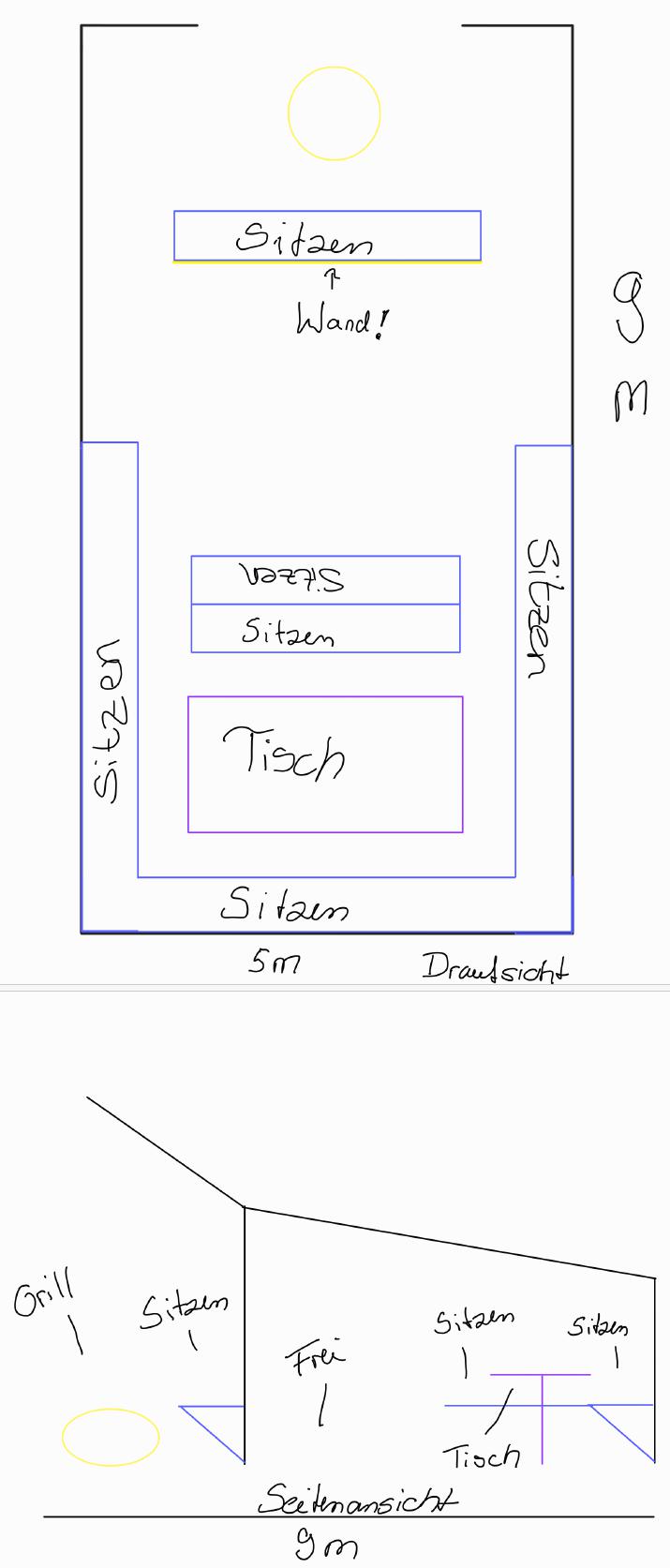 Outdoor facility solution sketch
The great hope for peaceEveryone sat at one table. But what began as a new start was to leave behind new disappointments many months later. On March 1, 2025, young people, parents, residents, local politicians, and other parties involved came together for a mediation. Everyone sat at one table. Rules were agreed upon. Contact persons were named. Communication channels were created.For many of those involved, this was the moment when the conflict could finally end. But the hope did not last long. According to accounts from the young people and parents, the agreed communication channels were later only rarely used. Instead of direct conversations, complaints continued to frequently lead directly to operations by the police and regulatory office. A development that many of those involved still view critically today. Because communication had been agreed upon. It was apparently replaced again by reports, controls, and operations. For many of those involved, this was precisely where the actual failure of the mediation lay. Because a conflict cannot be resolved if people talk to each other but then talk about each other again. “We wanted to talk to each other. Eventually it was only about us again.” A village square becomes a political issueWhat began as a neighborhood conflict suddenly occupied the administration, politics, and the public. People talked about the young people. Apparently much less often with them. The louder the public debate became, the quieter the voices of those affected seemed to become.For months there was discussion. In meetings. In newspaper articles. On the street. And of course about the young people. Many young people, however, increasingly had the impression that while everyone had an opinion about them, their own perspective played a surprisingly rare role. Many of those affected found the handling of their letter to the editor particularly disappointing. According to accounts from the young people and parents, it was not published in full. What remained was once again a feeling that the young people by now knew all too well: People talk about us. But only rarely with us. An irony that was to accompany the entire conflict. Because precisely those around whom it was supposedly all about increasingly had the feeling of hardly appearing themselves anymore. The village square suddenly becomes a top priorityA conflict that began with young people had now reached the town hall. On March 25, 2025, the village square was long since no longer an ordinary meeting place. A neighborhood dispute had become a political issue. The public turnout at the local council meeting showed that it had long since ceased to be about a few complaints.Even Mayor Martin Papke attended the meeting. For many citizens, a different question had long been at the center: How does a municipality actually deal with its own youth? During the meeting, the mayor declared: “I’m not putting a lid on this.” A sentence that initially sparked hope among many young people. Perhaps, many believed, things would finally no longer just be administered but solved. Perhaps someone would finally listen. Perhaps someone would finally understand. But the real contradiction was yet to come. The 40,000-Euro SolutionAccording to those involved, a comparatively simple solution had already been proposed beforehand: A simple container solution. Not particularly spectacular. Not particularly expensive. But practical. And above all immediately usable. Many young people would have preferred exactly this solution. Not because it would have been luxurious. But because it would have worked.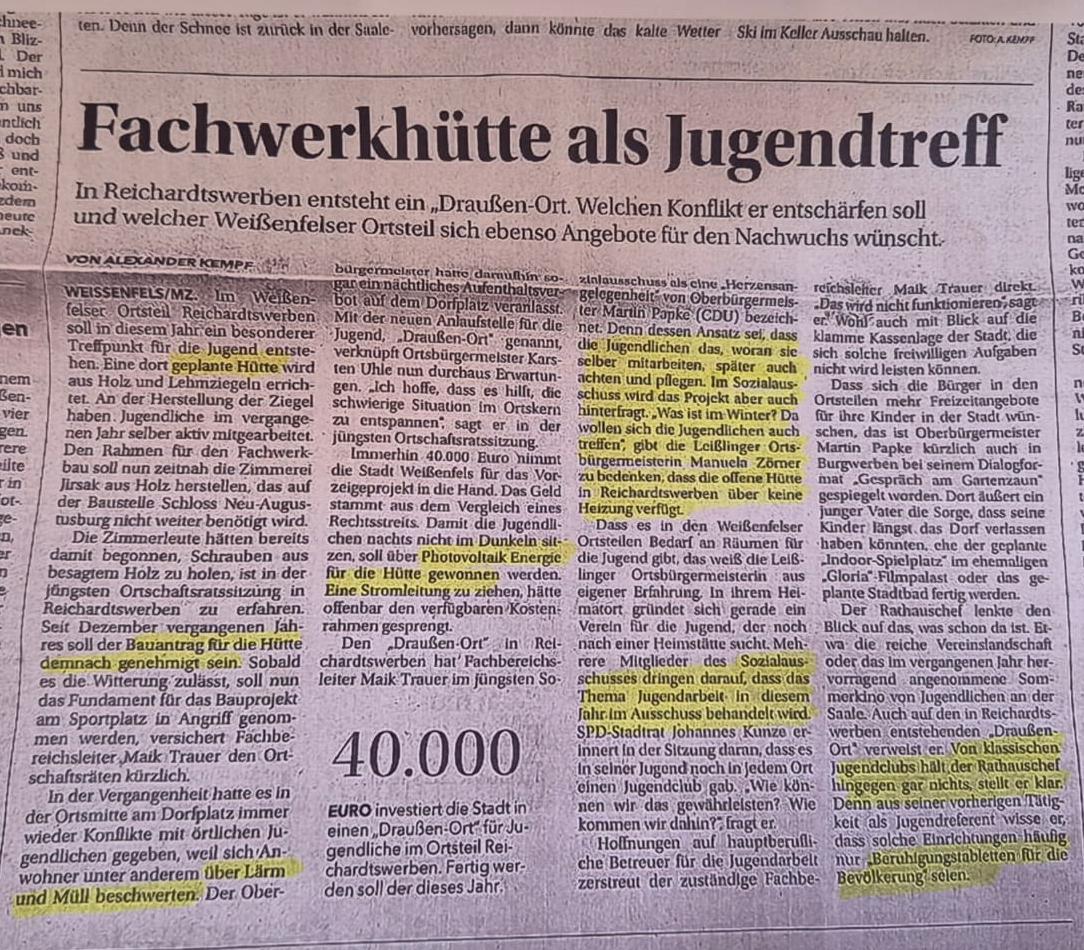
But precisely this idea disappeared from the discussion again. Instead, there was suddenly talk of a so-called outdoor facility. According to a newspaper report, the project was supposed to cost around 40,000 euros. A sum that still concerns many of those involved today. Because while elsewhere people regularly pointed to tight budgets, the comparatively cheap solution disappeared from view again. The more expensive variant remained. 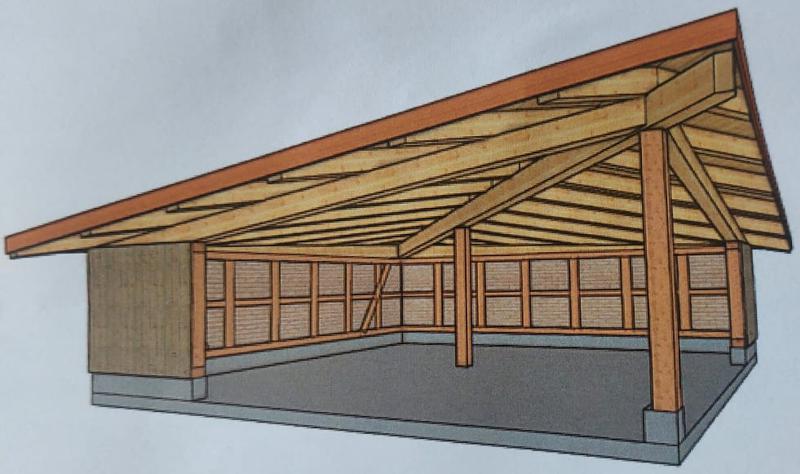
And from a simple wish for a meeting place, a municipal political project suddenly emerged. For many citizens, this was exactly where the head-shaking began. Workforce welcome – trust apparently more difficultYoung people were supposed to plan, design, and help build. At the same time, many continued to feel under observation. Despite all the disappointments, the young people continued. They developed ideas. They drew drafts. They participated in conversations. And later they even helped produce clay bricks. They invested time. They invested energy. And they invested hope.It is precisely here that one of the greatest contradictions of the entire conflict becomes visible. Because while the young people were supposed to participate, according to their account the operations by the police and regulatory office continued. For many young people, this created an irritating impression: Participation was desired. Trust apparently much less so. Because whoever invites young people to participate should not be surprised if they eventually also want to be treated as equal members of the community. A cry for help went unheardYoung people asked for support. According to their account, what they had wanted most was missing: an answer.On April 15, 2025, young people and parents wrote to Mayor Martin Papke and local mayor Karsten Uhle. They described their concerns. They asked for support. And they once again asked the same question that seemed to hover over the entire conflict: WHERE ARE WE SUPPOSED TO GO? 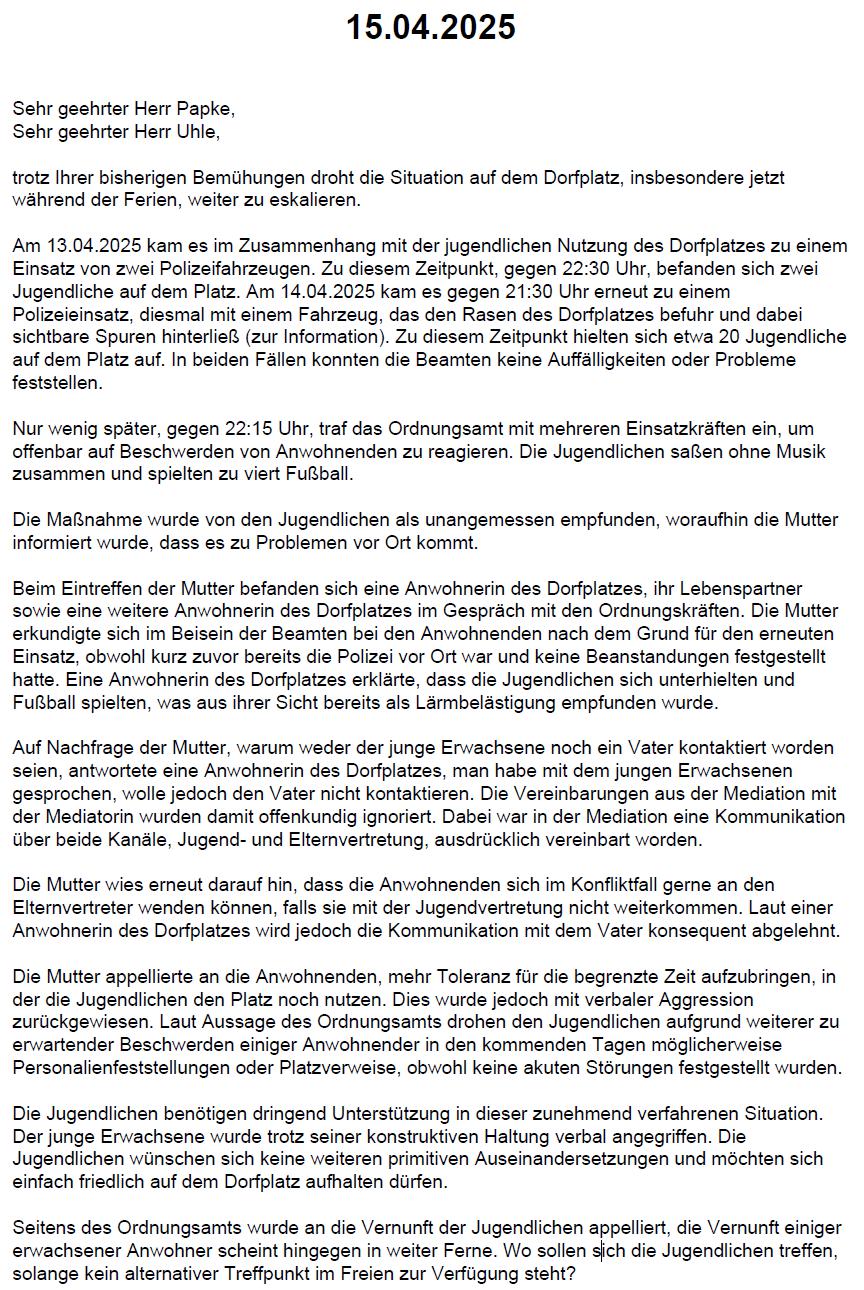
According to those involved, what followed their cry for help was not a rejection or a contradiction. What followed was something that many young people found even more disappointing: silence. No conversation. No explanation. No answer. For many young people, this was particularly bitter. Because they had not demanded special rights. No privileges. No exceptions. They simply wanted an answer. But whoever repeatedly calls for dialogue and then remains silent should not be surprised if not only patience is lost, but also trust. And it was precisely this trust that continued to break in the following months. Participation yes – staying no? The more talk there was of youth participation, the more often many of those affected gained the impression that they continued to be under suspicion at the same time. Youth participation on paper – everyday life under observationWhile participation was being discussed, many young people continued to feel like a problem that should disappear. On April 7, 2025, Mayor Martin Papke invited people to another meeting about the planned outdoor facility. The young people were supposed to have a say. To co-design. To co-plan. Actually exactly what municipal policy has been demanding for years. Young people should take responsibility. Young people should get involved. Young people should help shape their home.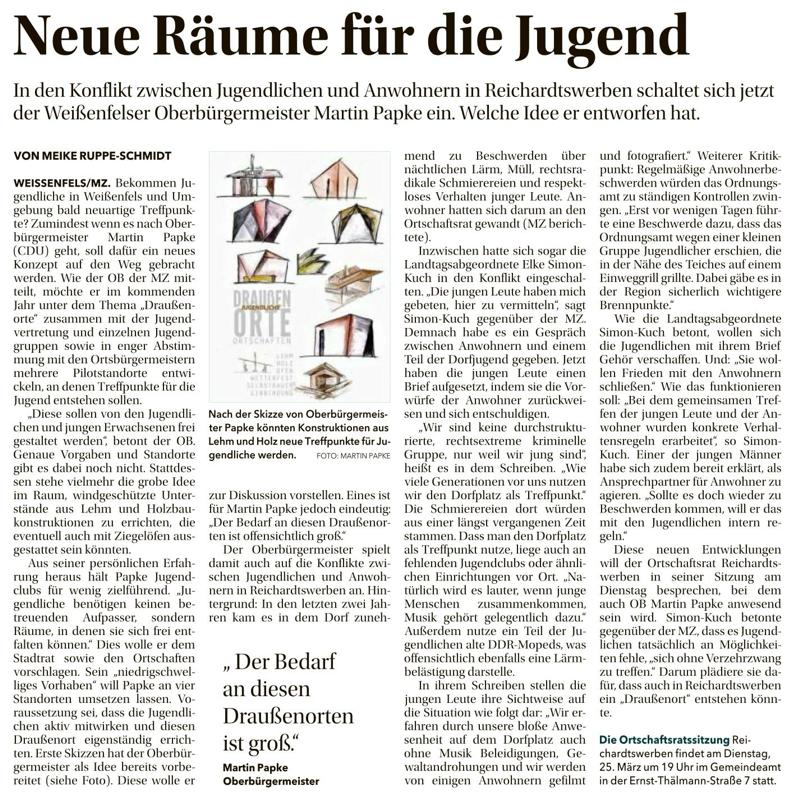
But while participation was being propagated on the one hand, according to their own account astonishingly little changed for many young people in everyday life. Because even during the Easter holidays, there continued to be operations by the police and regulatory office. It was precisely here that the real incomprehension solidified for many young people: Participate? Yes. Trust? Apparently more difficult. 15 young people reported – four young people foundNot for the first time, reports and later findings seemed to diverge. On the evening of April 30, 2025, the police were called again. According to the files, it had previously been reported that 15 young people were on the village square, consuming alcohol and being noticeable due to loud music.On site, however, the documents presented a different picture. Four young people were found. In addition, there were two young adults who, according to those affected, had simply stopped spontaneously and were actually on their way to friends. No loud music was detected. No quarrel was detected. No further disturbances were documented either. And according to those affected, this incident was not an isolated case. File inspections had previously repeatedly shown differences between complaints and later findings. This very contrast ran like a red thread through the entire conflict. Because the more often reports and actual findings diverged, the more pressing the question became as to whether the actual findings still matched the public image. From the perspective of many of those affected, the impression increasingly arose that narratives had over time become certainties. The new meeting place did not yet exist – the old one was supposed to disappearThe young people were supposed to move elsewhere. But where exactly? On May 6, 2025, four young people were invited to another conversation. According to those involved, they were simultaneously advised not to stay on the festival square after 7 p.m. anymore.However, the new meeting place did not even exist at that time. The old meeting place, on the other hand, was supposed to be used as little as possible. For many young people, this situation increasingly seemed absurd. The previous place was unwanted. A new place was not yet available. And yet it seemed to be expected that the problem would somehow dissolve into thin air. More and more often the impression arose that the question at the center was not where young people can be. But where they should preferably not be. And with that, the question that had long hung like a shadow over the entire conflict arose again: WHERE ARE WE SUPPOSED TO GO? 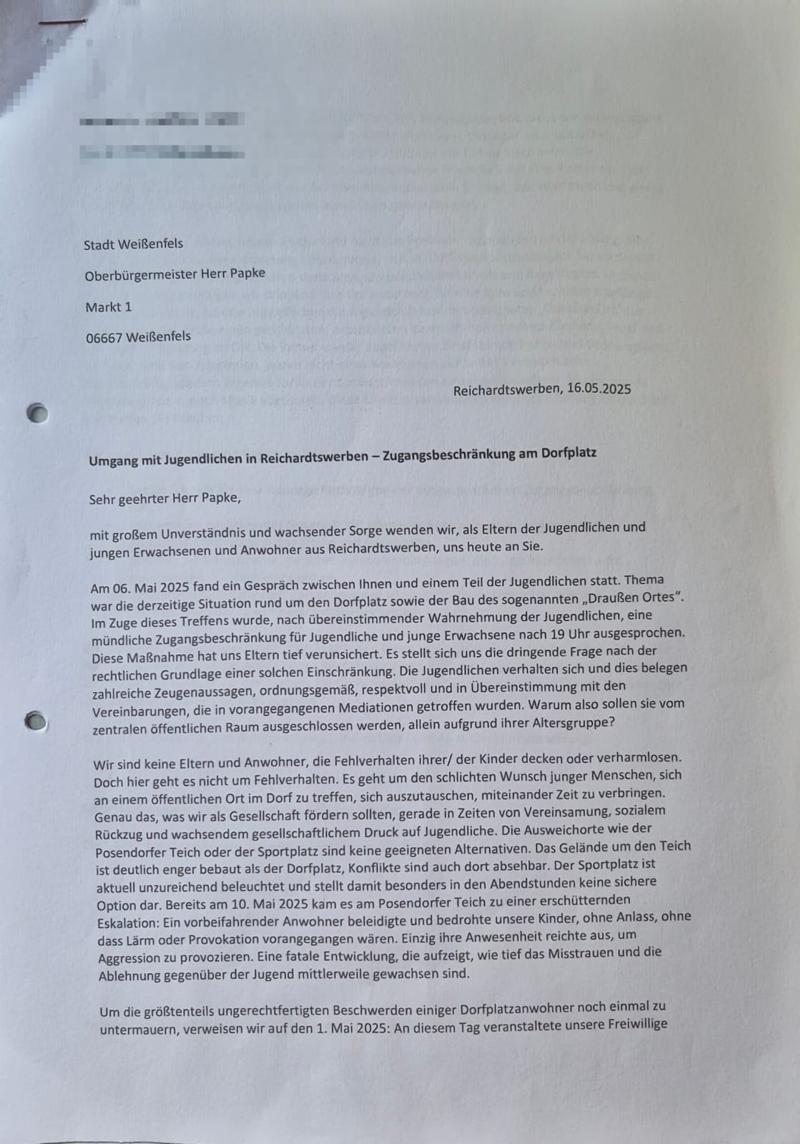
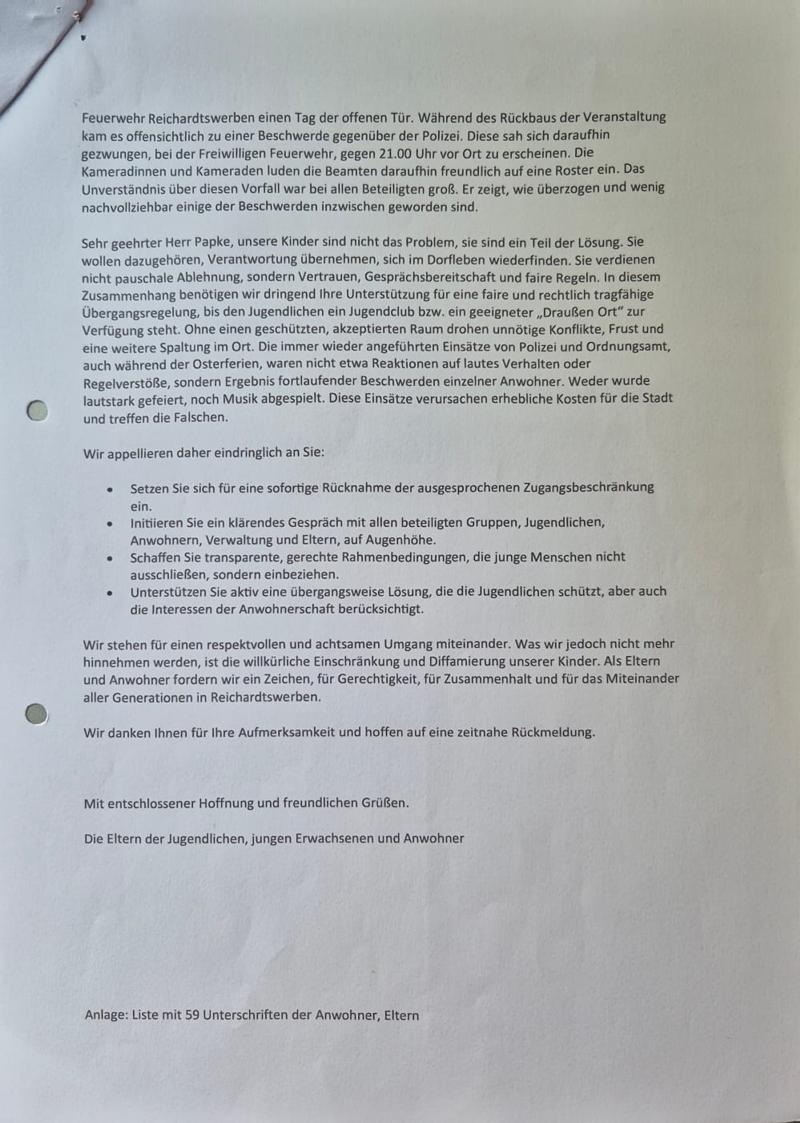
A conversation – and suddenly accusations were in the airWhat was announced as an exchange left many of those involved with a completely different feeling. On June 6, 2025, four young people and four parents were invited to another conversation. Many assumed it would be about the progress of the outdoor facility. But according to those affected, the meeting developed differently than expected.In addition to representatives of the city, police, and regulatory office, other parties took part. For many young people, the announced conversation therefore did not feel like an exchange but like a confrontation. During the meeting, several serious accusations were addressed. According to those affected, these descriptions originally came from an anonymized resident from Reichardtswerben. However, the resident in question was not present. Instead, the accusations were presented by representatives of the city of Weißenfels. While the identity of the complainant was protected, several young people and young adults were named with first and last names. According to those affected, the young people and young adults had no knowledge whatsoever of the accusations raised against them up to that point. Not of individual accusations. Not of part of the accusations. Of none at all. All the greater was the surprise for many when they were suddenly confronted with serious allegations whose originator was not present and which had never been discussed directly with them before. For many parents and young people, this was once again the real incomprehension. Why was there no initial conversation with each other? Why was there no mediation? Why were accusations passed on instead of first jointly questioning different perceptions? Because togetherness rarely arises through conversations about people. It arises through conversations with people. And it was precisely this that, from the perspective of many of those affected, seemed to be missing more and more often. A conflict between people had long since become a conflict about people. Two benches – and many open questionsThe originally much simpler container solution had been on the table. Practical. Usable year-round. And, in the opinion of many of those involved, significantly cheaper. But precisely this idea was no longer discussed.In the end, there were initially two benches and a trash can. To this day, the announced lighting is missing. The city of Weißenfels and the municipality of Reichardtswerben did not see themselves in a position to lay a power cable and install lighting. There is no shelter. There is also no protection from rain and wind. In addition, the makeshift outdoor facility is not in the village center. It is located behind the sports field. Off to the side. In a dark spot. Unlit. While the original village square had been in the middle of the village for generations and part of social life, the new meeting place, from the perspective of many young people, was created exactly where no one is disturbed. Or where no one looks. For many young people, it was therefore clear early on: This was not a new center. This was an alternative place. And it is precisely in this that many of those involved still see the real symbolism of this conflict. From a desire for a place, a years-long dispute emerged. From a simple solution, a 40,000-euro project. And after months of discussions, political talks, and numerous promises, there were initially two benches and a trash can – far away from the village center. For many of those involved, a bitter impression therefore remained: Perhaps less administration and earlier talking to each other would have been better. Because sometimes places say more than political statements. And sometimes two benches say more about a conflict than entire meeting minutes. When there was talk of relaxation – and the escalation only just beganPublicly, improvements were spoken of. A few days later, the probably most conflict-ridden phase of the entire dispute began.On October 21, 2025, the local council of Reichardtswerben once again dealt with the situation around the village square. According to the minutes, local mayor Karsten Uhle declared that the situation with the young people had improved. For many of those involved, this statement still sounds like bitter irony today. Because what followed was anything but relaxation. Warning fines. Controversial operations. A so-called coordinated access. A general decree. Court proceedings. And finally a court ruling. This is precisely why an uncomfortable question remains for many young people and parents to this day: If the situation had already improved – why did the escalation only really begin then? 55 euros warning fine – and the feeling of suddenly being perpetratorsOn October 25, 2025, another incident occurred that, for several young people and young adults, still counts among the most stressful experiences of the entire conflict. Warning fines were later issued against a total of five young people. 55 euros each.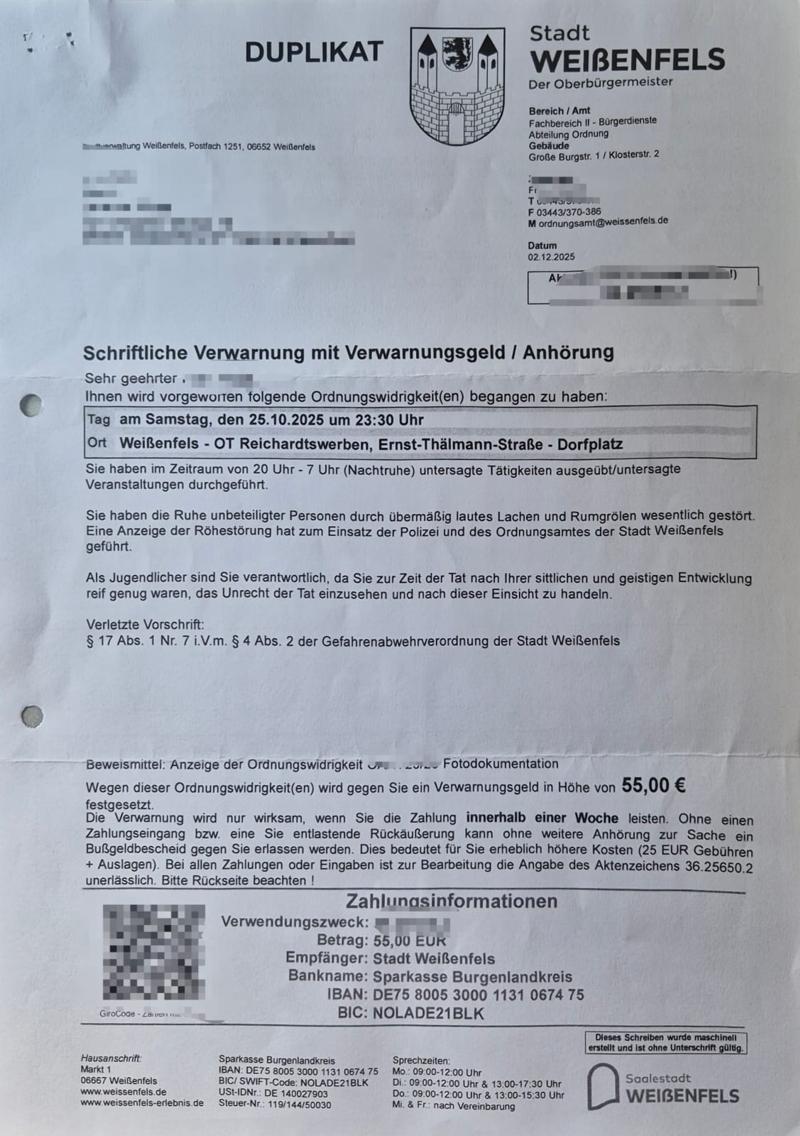
But for many of those affected, it was never about the money. It was about the feeling of suddenly no longer being perceived as neighbors, village children, or young people, but as disturbers. As a problem. As people one had to take action against. The proceedings were later to be reviewed legally. This is precisely why the question remains for many of those involved to this day: Why did young people first have to be treated like perpetrators? For many, it was not the amount of 55 euros that was the real damage, but the loss of trust. Five young people wait to be picked upWhat appears in the documents as an operation is described by those affected in a completely different way to this day. According to those affected, three young men and two teenage girls were in the area of the community center that evening. The two girls were to be picked up by their parents. According to those involved, the situation was calm. No music. No shouting. The young people were simply waiting for their ride home. For many parents and young people, this very contrast is still difficult to comprehend today. Because while the documents speak of disturbances of the peace and a coordinated access, those affected remember five young people who simply wanted to go home.A coordinated access – on whom exactly?The question of proportionality still concerns many of those affected today. The documents explicitly speak of a so-called “coordinated access.” Two patrol cars. One vehicle from the regulatory office. At least nine officers. And on the other side, five young people. Completely incomprehensible to many of those involved. Because in their view, a normal conversation might have sufficed. Instead, many young people were left with a feeling that still accompanies them today: Not security. But fear.The encounter in the dark cornerFor many young people and parents, it is not the fine that is the most stressful chapter of this conflict to this day, but the night of October 25, 2025.According to those affected, the entire incident took place in complete darkness. In a poorly lit, poorly visible corner behind an opaque wooden fence. According to their account, at least one employee of the regulatory office was initially not recognizable there at all and only appeared suddenly at the immediate moment of the encounter. What happened next still occupies many of those affected today. Because from the young people’s perspective, five young people were simply sitting together and waiting for two young people to be picked up by their parents. No music. No resistance. And yet the documents speak of a “coordinated access.” The aforementioned two patrol cars. One vehicle from the regulatory office. At least nine officers. And on the other side, five young people who, according to those affected, were simply sitting together. The question of proportionality inevitably arises. Did five young people who were simply sitting together really have to trigger a coordinated access, a large-scale operation with at least nine officers? From the perspective of numerous affected individuals, this very contradiction is still difficult to understand today. According to those affected, two young people were injured during this operation. The legal processing of the incident is or was ongoing according to those involved. For many young people, what remained after that night was not the feeling of having been protected, but of having been observed. Surprised. And intimidated. A bitter contradiction. Because state action is supposed to create trust. Not fear. Some scars are not visible. But they remain. No eviction – not even toward relativesEven when parents arrived, more questions than answers remained for many of those affected. Whoever expects trust should begin with openness.According to those affected, the mother of one young person arrives at the scene shortly afterward. Not as an uninvolved passerby. Not as a spectator. But as a mother. According to those involved, she had previously been informed by a young person present who had been very worried. The situation had seemed threatening to her. The mother explicitly identifies herself as a relative according to those affected and asks for an introduction as well as a proper identification of the regulatory office employee. Other family members are also present on site in the further course. But according to those affected, neither a named introduction nor a proper identification takes place. For many parents, this is still difficult to comprehend today. Because especially in a situation in which, according to those affected, two young people had already been injured, many would have at least expected transparency. Instead, once again a feeling remained that had long run through the entire conflict: Young people should explain themselves. Parents should explain themselves. The acting persons apparently not. Still images instead of evidence?The photo documentation contained in the file raises further questions from the perspective of those affected. Because the images are dated in the file to the morning of October 27, 2025, between 7:48 a.m. and 7:50 a.m. They are thus significantly removed in time from the actual allegation on the evening of October 25, 2025. For many of those involved, an obvious question therefore arises: How are still images that do not coincide in time with the actual incident supposed to prove loud laughing or an alleged disturbance of the peace?There is also another circumstance. According to the files, not even a music box was found. And yet warnings were issued. From the perspective of numerous affected individuals, this reinforced an impression that had accompanied them for months: Accusations were quickly formulated. Proof apparently much more difficult. 55 euros – and many open questionsFrom an evening of sitting together, an administrative offense suddenly emerged. The notice from the city of Weißenfels dated December 2, 2025, reads clearly. Almost shockingly clearly. The affected individuals are accused of having violated the night-time quiet period on the village square on October 25, 2025, at 11:30 p.m.The wording is clear: “Excessively loud laughing and shouting.” A significant disturbance of uninvolved persons. A disturbance of the peace. An operation by the police and regulatory office. And finally 55 euros. What reads on paper like a clear situation raises numerous questions upon closer inspection. Because according to those affected, five young people were sitting together that evening waiting for two young people to be picked up by their parents. No loud music. And yet an evening of sitting together suddenly becomes an administrative offense. Even more revealing, however, is another passage in the notice. It explicitly states that the affected individuals had carried out “prohibited activities or held prohibited events” during the night-time quiet period. Once again completely incomprehensible. Because according to the account of the young people and young adults, there was on that evening: No event. No party. No loudspeakers. No organized gathering. Since when is sitting together suddenly a “prohibited event”? What specific “prohibited activity” is supposed to have been carried out here? Neither from the notice nor from the further documents does it emerge clearly, from the perspective of those affected, what is meant by this. Here an impression that had accompanied many of those involved for months becomes denser: From five young people, those responsible for an “event” suddenly emerge. From a conversation on stairs, a “prohibited activity.” And from an ordinary evening, an administrative offense proceeding. As evidence, the notice cites a report of the administrative offense and photo documentation. Particularly bitter: A one-week payment deadline. Otherwise, further fees and a fine proceeding were threatened. The administration acted quickly when it came to demands against young people. For many of those affected, however, the question of what the accusations actually relied on remains less clear to this day. This is precisely why another point is necessarily part of this story: After legal review, the proceedings were discontinued. For many young people, this was not a triumph. No victory. No satisfaction. But the same question that runs like a red thread through the entire conflict: Why did an evening of sitting together have to become a proceeding at all? The 55 euros were eventually forgotten. The loss of trust was not. When complaints become a general decreeFrom a conflict about a meeting place, an administrative proceeding with far-reaching consequences emerged. For months, complaints shaped the discussion. From the perspective of many young people and parents, the impression increasingly arose that it was no longer individual incidents that were the focus, but the meeting place itself. What had been a matter of course for earlier generations became increasingly a point of contention for the young generation. A village square became a problem. A meeting place became a file. And young people became more and more often those affected by regulatory measures.The general decreeThe city of Weißenfels eventually issued a general decree. For many young people, this was a turning point. Because for the first time, it was no longer individual situations that were assessed, but a public space as a whole. The measure intervened deeply in the everyday life of the young people. And it reinforced for many of those affected the impression that it was no longer specific behavior, but already the mere presence of young people that had become the problem. A meeting place became a danger situation.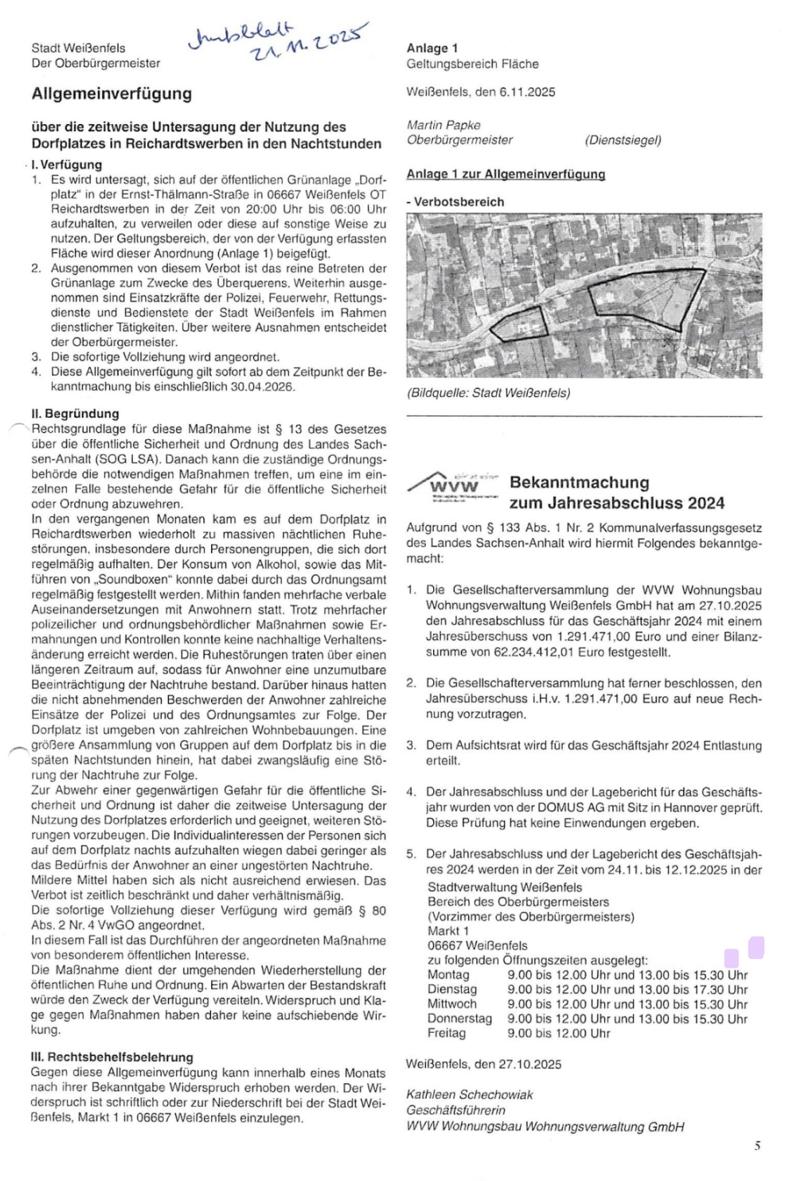
The basis of the decreeIn the justification, among other things, noise nuisance, alcohol consumption, and the regular carrying of sound boxes were cited. It was precisely this presentation that shaped the public image for months. For many residents, the impression of significant and permanent disturbances arose. For many young people, on the other hand, a different question arose: What exactly were these statements based on? Because a general decree is not an appeal. It is a significant intervention. And interventions require solid facts.When accusations become bigger than those affectedMany young people and parents found it particularly stressful that numerous accusations were publicly in the air without those affected even knowing about them. According to those affected, the accusations were not presented by a resident themselves, but by representatives of the city in the absence of an anonymized resident.The young people and young adults, on the other hand, were named with first and last names. There was no anonymization on their side. For many parents, this created an incomprehensible impression: The source of the accusations remained protected. Those affected by the accusations, however, did not. Even heavier, from their perspective, was another point: According to their own account, the young people and young adults initially knew nothing at all about the accusations raised against them. They could therefore neither explain themselves nor clear up misunderstandings. Once again, people did not talk with the young people, but about them. Complaints are important – but are they enough?Of course, complaints must be taken seriously. But from the perspective of many parents and young people, a distinction must be made between complaints and actual findings. Because complaints describe perceptions. Administrative measures, on the other hand, require facts. It was precisely at this point that doubts began for many of those affected. Where does the complaint end? And where does the provable reality begin?The conflict leaves the village squareAt the latest with the general decree, for many of those involved it was long since no longer just about noise. Not just about individual evenings. And not just about a meeting place. It was about fundamental questions. About proportionality. About equal treatment. And about the question of whether young people in their own home are still perceived as a natural part of the community.For many young people, this was the moment when a dispute about volume became a dispute about belonging. Because when complaints become bans, it is eventually no longer just about rules. Then it is about the question of who public space actually still belongs to. When the official narrative develops cracksQuestions that the city itself had requested have still not been answered. The questions to the city of Weißenfels did not arise from mistrust. They arose from a serious intervention. Because whoever restricts public spaces and effectively tells young people where they should no longer stay must be prepared to disclose the basis for such decisions.On November 27, 2025, around 15 citizens wanted to publicly question the general decree in the city council meeting. But instead of receiving answers, they were asked to submit their questions collectively in writing. That is exactly what they did. On December 4, 2025, the catalog of questions reached the city of Weißenfels. The questions were specific. They were factual. And they concerned precisely those points that were later to occupy the administrative court as well. 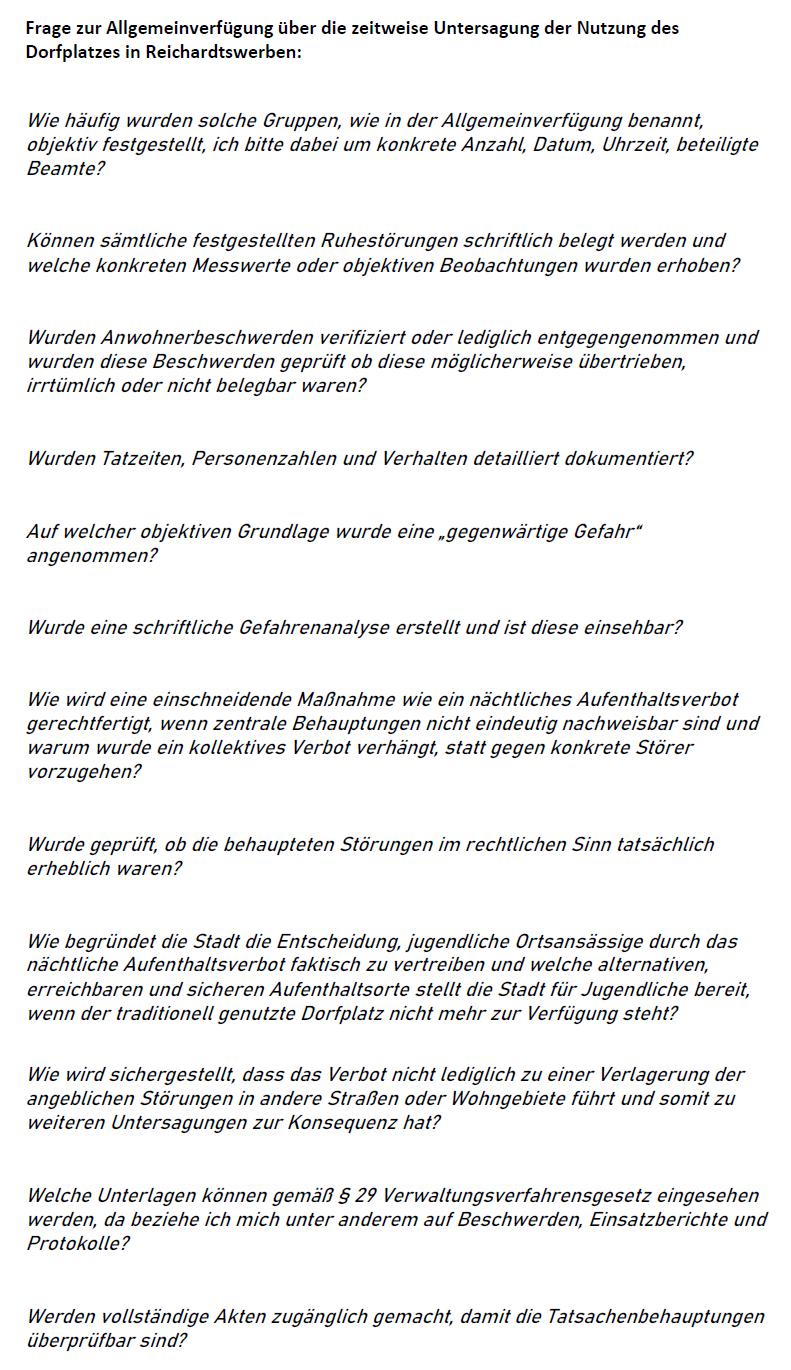
But precisely on the questions that the city itself had requested, no comprehensive answer has been provided to this day. Reminders in January. Further reminders in February. At the beginning of February, the legal department’s request for patience. Then silence. From the perspective of numerous affected individuals, an irritating impression therefore remained: The city asked for questions. The citizens provided them. Answers were not forthcoming. Perhaps the city administration could not answer these questions at all? 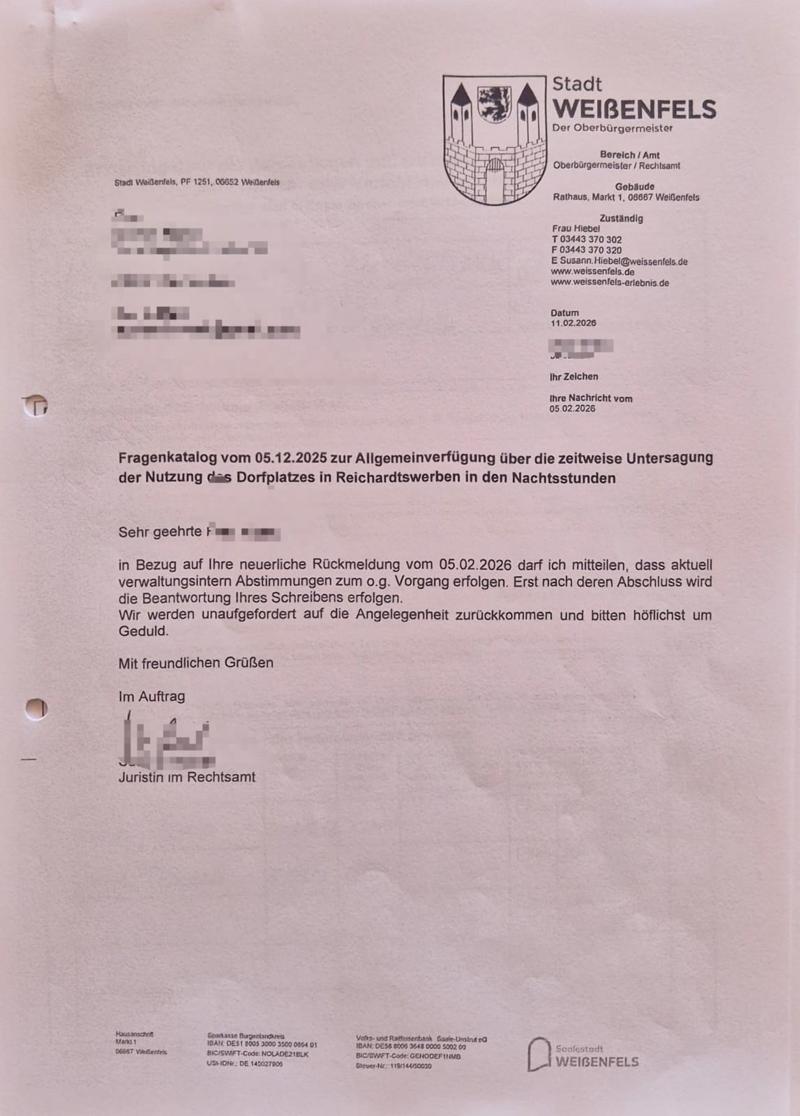
When files and public presentation divergeThe general decree painted the picture of massive and regular disturbances. Regularly detected sound boxes. Alcohol binges. Significant burdens. It was precisely this image that shaped the public discussion.But according to those affected, the files tell a different story: No documented music box. Only two documented cases of alcohol consumption since 2024. And numerous operations in which reported facts and actual findings did not match. It is precisely here that the real contradiction becomes clear for many of those affected. The public debate became increasingly dramatic. The file situation, on the other hand, apparently increasingly sober. And with that, a political question inevitably arises: Did a real problem arise here – or primarily the image of a problem? When the court reviewed the basis of the decreeFor months there had been talk of a specific danger. For months the impression had been conveyed that extraordinary conditions required extraordinary measures. Then an independent court dealt with precisely this justification. The result was surprisingly clear for many. In the assessment of the administrative court, there were “no indications whatsoever” for the claimed specific danger.The costs of the proceedings were imposed on the city. This created a contradiction that still stands today: The administration spoke of danger. The court saw no sufficient basis for it. This is precisely why many of those affected still ask themselves the same question today: How could such a far-reaching intervention occur if precisely the claimed danger later did not stand up to judicial review? 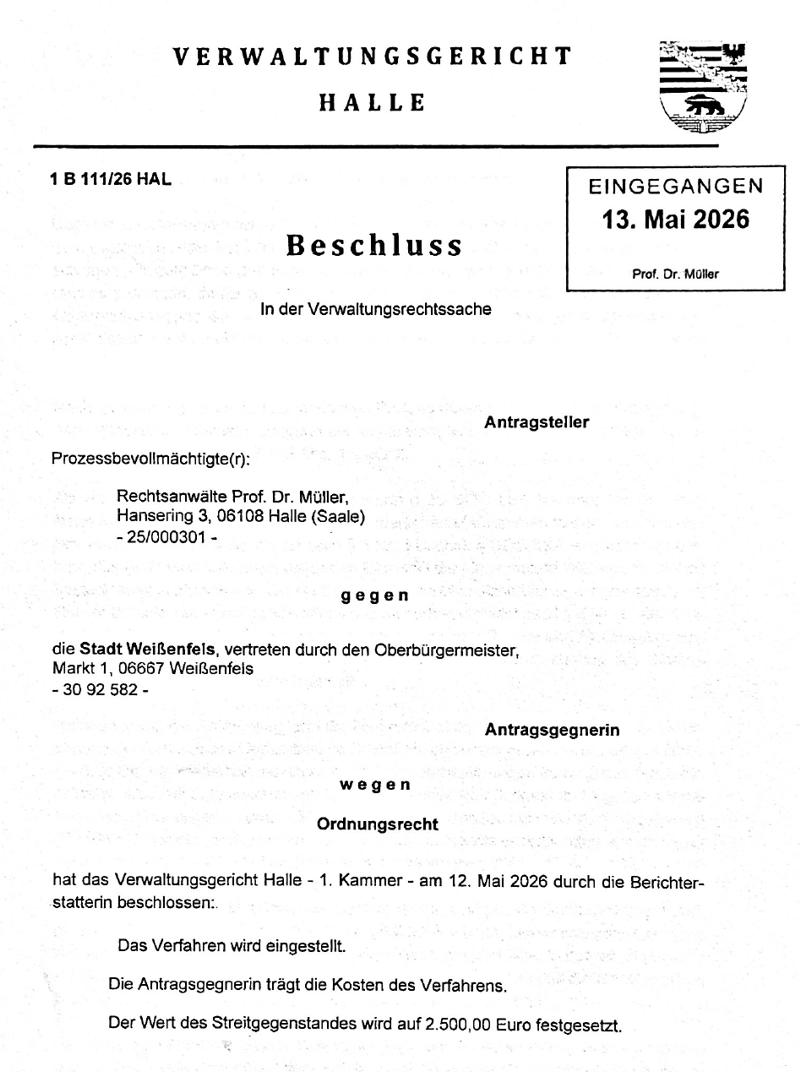
Why was there hardly any talk about the contradictions?With the court ruling, many young people and parents associated the hope for review. Not for revenge. Not for triumph. But for honesty. But from the perspective of many of those affected, there was subsequently no intensive discussion about the contradictions. Not about the unanswered questions. Not about the file situation. Not about the court’s assessment. But once again about the young people. This created an impression for many that still hurts today: Accusations received publicity. Exonerating developments, on the other hand, strikingly little attention.It was also about justiceFor years, young people and parents had to explain themselves. They had to defend against accusations. They had to accept measures. They had to justify themselves. And they had to experience that complaints often carried more weight than their own experiences. Of course, many of those affected eventually also wanted a positive decision. Not out of schadenfreude. But because they were tired of permanently only taking on the role of the accused. Because eventually a simple question arises: When will those against whom all these accusations are directed actually also be heard?The ruling of the administrative court therefore meant far more for many than a legal decision. It meant that their doubts were not unfounded. That their questions were justified. And that criticism of state action does not automatically mean being a troublemaker. Because whoever demands insight from young people must also be prepared to critically question their own actions. Perhaps the young people never wanted to be winners. But they also did not want to be the only ones who lose permanently. Because in the end it was not only about a village square. It was about the question of whether justice applies to everyone – or only to those whose voice is heard loudest. When assertions are supposed to become realityFor months, the public was given the impression that Reichardtswerben was suffering from extraordinary conditions. There was talk of alcohol binges. Of sound boxes. Of permanent disturbances. Of conditions that allegedly repeatedly required intervention. But the deeper young people and parents later looked into the files, the greater the astonishment became. Because precisely what was repeatedly cited publicly as justification could hardly be found there according to those affected. No documented music box. No proof of permanent noise nuisance. No continuously documented alcohol binges. Instead, only two documented cases of alcohol consumption since 2024.And it is precisely here that perhaps the greatest contradiction of the entire conflict begins. The more dramatic the public narrative became, the more sober the file situation appeared. For many parents and young people, the question therefore eventually no longer arose as to whether there had been individual complaints. But: How could the image of a permanent state of emergency arise from individual reports? And even more fundamentally: How often does something have to be asserted before it is eventually regarded as truth? It was no longer the documented reality that determined the debate. But increasingly the debate determined the reality. Complaints became operations. Operations became a danger situation. And a danger situation eventually became a general decree. Was the beginning of the conflict perhaps known long ago?In retrospect, many of those affected still ask themselves an uncomfortable question today: Was the escalation actually a spontaneous development? Or did it begin much earlier?As early as mid-January 2025, there was a public call to repeatedly call the police and regulatory office. Until something finally happened. In retrospect, that is exactly what happened. More and more reports. More and more operations. More and more files. And in the end, ever sharper measures. Of course, every citizen has the right to file complaints. But this is precisely why another question arises: What happens if it is no longer actual findings that determine the development – but the mere frequency of reports? Because more reports create more operations. More operations create more files. And more files in turn create the impression of an ever greater problem. How bad was the situation really? And how often did it have to be reported before it seemed bad enough? For many parents and young people, this is precisely where the real irony of the entire conflict lies. Was the development the consequence of an extraordinary problem? Or did primarily the image of an extraordinary problem arise? When reports suddenly become factsIn the course of the conflict, a pattern emerged that still occupies many young people and parents today. Again and again, dramatic reports were at the beginning. And again and again, what the police or regulatory office actually found was significantly less spectacular. It was precisely here that, from the perspective of many of those affected, the real imbalance began. What was actually found no longer seemed decisive. What seemed decisive was rather that something had been reported again. The more often something is reported, the more credible it seems to become. Even if the reality is always different. Because measures may only be based on facts. Not on moods. Not on habits. And not on repeatedly asserted claims. When subjective perceptions become facts, the order eventually gets mixed up.When it was no longer incidents but young people that became the problem?Perhaps this is the most uncomfortable question of the entire conflict. Because at some point it no longer seemed to be about individual incidents. Not about specific disturbances. But more and more often about the mere fact that young people came together at all. Controls. Operations. Evictions from the square. And more and more often the same impression: It was no longer the behavior that was the problem at some point. But the young people themselves.And perhaps what was actually being talked about was lost sight of. Because it was never about organized crime. Not about violent offenders. Not about strangers. It was about the village’s own children. About members of the volunteer fire departments of Reichardtswerben and Tagewerben. About soccer players of SV Reichardtswerben. About handball players of TSV Reichardtswerben. About members of the Tagewerben carnival club. About young people who take responsibility and are themselves part of the village community. And it is precisely in this that many parents still see the greatest contradiction today. Because precisely those who are otherwise referred to as “lived village community” were suddenly treated more and more often like a problem. They were not strangers. They were the village’s own children. Perhaps this was where the most painful contradiction lay. It was no longer the question of how young people can be integrated that was increasingly at the center. But how to control, limit, or keep them as far away as possible. This is precisely why many parents got involved at all. Not out of political ambition. But because they believe in their children. Because they believe in their youth. And because looking away was not an option. We do not look away. We do not talk about each other. We fight for a good togetherness. Not against the village. But for the village. Whoever believes in their youth does not fight against the future. They fight for it. The real losers were never in the filesFiles contain operations. Notes. Complaints. Administrative offenses. But one thing is not found there: Disappointment. Loss of trust. Or the feeling of no longer being welcome in one’s own hometown.Perhaps this is precisely where the real tragedy of this conflict lies. Because a village community does not lose first in court. It loses at the moment when young people begin to believe that their presence is unwanted. The young generation does not disappear. It does not become smaller. It becomes quieter. And if young people eventually stop asking: “Where are we supposed to go?” And start saying: “Then we’ll just stay away.” Then it is not the youth that has lost. Then the village has lost. When even the school graduation became a regulatory caseNot even a special day remained untouched by the conflict. On May 13, 2026, around 6:10 p.m., several young people wanted to celebrate their school graduation. Not on the village square. Not at the playground equipment. But at the benches in the playground area. Other alternative options had been discussed repeatedly beforehand.The area at Possendorfer Pond had also been mentioned as an alternative in the meantime. According to those affected, however, it was deliberately not used after there had also been conflicts with a resident there in the past. The gathering did not end naturally. But through regulatory intervention. According to those affected, there had been no conversation beforehand. No warning. No verbal request. No prior address. Instead, the young people were immediately confronted with administrative offense proceedings. Corresponding fine notices have now been issued. Legal remedies are being filed against these decisions. The legal review of the approach is therefore still ongoing. For many parents and young people, this was more than just another incident. Because for months there had been talk of dialogue, de-escalation, and mutual understanding. When the opportunity arose to conduct precisely this dialogue, according to the perception of those affected, little of it seemed to remain. The conversation seemed to have been replaced by the proceeding. Different standards?And it is precisely here that the next hardly explainable contradiction exists for many parents. Although the playground sign indicates use of the actual playground for children aged 0 to 12 and a usage time of 8 a.m. to 8 p.m. According to those affected, however, the young people on that day were neither on the playground equipment nor on the sand area. They were sitting at the adjacent benches.This is precisely why many parents asked themselves whether the use of the playground was actually the focus here – or something else entirely by now. Because at Easter bonfires and other events around the village square, the area is regularly heavily frequented. This also includes numerous young people from outside. According to the perception of many villagers, however, this does not lead to comparable discussions or administrative offense proceedings. In the case of the school graduation celebration, on the other hand, it was predominantly young people from Reichardtswerben itself. The village’s own children. And it was precisely in this that many parents recognized the next contradiction. If foreign young people at festivals do not present a problem – why were precisely the village’s own young people made into the problem? Not after violence. Not after crimes. Not after an escalation. And according to those affected, also not after a prior conversation. For many parents, therefore, an even more fundamental question arose: Was a playground actually being protected here – or were the young people themselves once again declared the problem? The same place, the same benches, the same surroundings, but apparently different standards. It was not the place that seemed to be the problem. But the young people. Where others create memories, file numbers emergedPerhaps this very day describes the entire conflict better than any statistic. Because on a day that young people should actually remember with joy for a lifetime, no carefree memories were created this time.It was not about violence. Not about crimes. Not about a situation that got out of control. It was about young people from their own village who wanted to celebrate their school graduation. And yet this day ended for some with a fine notice. Where others take memory photos, file numbers were created this time. For many parents, this became a symbol of the past months. Because if even a school graduation is no longer primarily an occasion for joy, but the subject of an administrative offense proceeding, a fundamental question eventually arises: When did accompaniment become control? And when did togetherness become administration? When even the contradictions hardly played a role anymoreCourt ruling, camera incident, and local council – and yet the debate hardly changed. On May 15, 2026, the administrative court’s ruling became publicly known. For many parents and young people, this was the hope for a new beginning. For review. For the willingness to also critically question one’s own perspective. But only one day later, the next remarkable incident followed.On May 16, 2026, two cameras belonging to a resident were discovered on the village square. According to those involved, they were documented by the police and regulatory office. The cameras had to be removed. A legal review was initiated. Previously, parents had reported that photos and video recordings of children and young people had been shown to them. The local mayor was informed in writing and, according to the parents, announced that he would pass the matter on to the local council. And suddenly a question arose that hardly anyone had asked in the previous months: Who was actually observing whom here? Because for months, young people had been the subject of complaints, controls, and debates. Now cameras that were on the village square had to be removed. For many parents, this contained another contradiction. The meeting of May 19, 2026When the local council met on May 19, 2026, both the court ruling and the camera incident were already known. Many parents therefore hoped for an honest review. But according to the perception of those affected, these developments were not reflected in the discussion or later in the minutes in a comparable way. Instead, once again young people and complaints were primarily at the center. And it was precisely in this that many of those affected saw perhaps the greatest political imbalance of this conflict. A court expressed doubts. Cameras had to be removed. But the debate remained the same.When accusations are louder than contradictionsPerhaps this is precisely where the real tragedy of the past months lies. Because accusations continued to receive attention. Exonerating developments, on the other hand, significantly less.For many parents, a bitter impression therefore arose: People spoke loudly about young people. About mistakes and contradictions, significantly more quietly. This is precisely why a question remains open to this day: What actually has to happen for not only accusations but also doubts to receive the same attention? Because a community proves its strength not by how loudly it talks about problems. But by how honestly it deals with its own contradictions. It is an accusation. A mirror. A final thought that still occupies the reader when he has long since put the document aside. The story has been told. Now the question must be asked: How could it have come to this at all? Not: Who was right? But: What does all this say about us? Perhaps it was never just about a village squareAfter all the complaints. After all the controls. After all the meetings. After all the discussions. Perhaps a much more uncomfortable question remains: Was it ever really just about noise?Because when one looks back at the past years, contradictions arise that have hardly been resolved to this day. A danger situation was described. A court saw no sufficient indications for it. There was talk of sound boxes. The files show none. Alcohol binges were spoken of. Only two cases were documented. There was talk of dialogue. Procedures often followed. Village community was spoken of. And yet neighbors ended up facing each other. Perhaps this is precisely where the real tragedy lies. Because at some point it was no longer about individual incidents. Not about benches. Not about a playground. And perhaps not even about peace and quiet. But about something much more fundamental. About the question: Who belongs? And who does not? Because this very question runs like a red thread through the entire story. Who is allowed to stay? Who disturbs? Who is heard? And whose perspective ultimately prevails? Perhaps the biggest problem was therefore never the village square. Perhaps the biggest problem was that at some point people stopped seeing each other as part of the same community. But as the opposing side. And perhaps this is exactly where the failure of a community begins. Not when people have different opinions. But when they stop seeing each other as part of the same community. Because one thing should never be forgotten amid all the files, proceedings, and discussions: The young people of yesterday will one day be the adults of tomorrow. The parents of today will grow older. Today’s decisions will one day be history. But the memories remain. And perhaps our children will one day no longer ask: “Who was right back then?” But something much more painful: “Why didn’t you notice back then that we were never your opponents?” Author: AI-Translation - Die Betroffenen | |

|
| Other articles: |
 | No More Cat Table in the Council Chamber of Weißenfels City CouncilThe Weißenfels City Council is quite a special case in this German "democracy". Or rather, those council members who feel connected to the chairman of the council, King Ekkart the... zum Artikel |
 | 593 Reichsbürger in Hohenmölsen?It was election day on March 30, 2025, in Hohenmölsen. The 8,069 eligible voters were called to decide who should be the chief administrative officer – also known as the mayor â... zum Artikel |
 | Visit from the »do-gooders« – Property damage allegedly caused by ANTIFA members on the property of state parliament member Lothar Waehler (AfD)On the night of September 27, 2025, to September 28, 2025, suspected members of ANTIFA also entered the property of AfD state parliament member Lothar Waehler and destroyed, among ... zum Artikel |


|
Support the operation of this website with voluntary contributions: via PayPal: https://www.paypal.me/evovi/12 or via bank transfer IBAN: IE55SUMU99036510275719 BIC: SUMUIE22XXX Account holder: Michael Thurm Shorts / Reels / Kurz-Clips Imprint / Disclaimer |