


Please support THE CITIZEN'S VOICE with a donation HERE!

|
|
||
|
||
|
||
|
||
| Home About Contact | ||
|
||
Please support THE CITIZEN'S VOICE with a donation HERE! | ||
|
|
||
“Pure Party Dictatorship!” – Joana Cotar Reveals: The Bundestag Is a Self-Service Shop for the Elites, Where MPs Vote Like PuppetsFormer AfD MP Joana Cotar delivers a ruthless exposé after 8 years in the Bundestag: Not democracy, but party discipline, “confessional meetings,” and clueless MPs casting red cards without knowing what they are voting on. A system that rewards loyalty and despises the people—while billions in taxpayer money flow into party coffers. Anyone who still believes Berlin governs in our interest is gravely mistaken. The Bundestag – A Dictatorship of the PartiesIn a highly explosive speech at a joint event hosted by dieBasis and BSW Lüchow-Dannenberg, former Bundestag member Joana Cotar delivered a devastating verdict on her eight years in parliament. Her message was clear and uncompromising: Germany is not a real democracy. Instead, what prevails is a “pure dictatorship of the parties”, where MPs are bound not by conscience but by party discipline. In this system, the people no longer matter.Cotar spoke of her initial naivety: “When I entered the Bundestag in 2017, I firmly believed that if you truly wanted to do the right thing and were convinced of it, you could actually change something in parliament.” After six months, she said, it became clear to her: “The system works exactly as it was designed to work—just not for those who pay for it.” Clueless MPs and “Supervised Voting”Particularly shocking are Cotar’s accounts of everyday parliamentary life. Genuine debate is avoided in committee meetings. Opposition motions end up “in the trash every single time”—even when they are good proposals. “Three good motions, Ms. Cotar, wrong party—we’re voting them down,” she quoted an SPD colleague as saying.Even more dramatic are the votes in the plenary chamber. Cotar describes what amounts to “supervised voting”: MPs simply follow the parliamentary floor manager, who stands at the front holding the correct card (red for no, blue for yes). During roll-call votes, all one hears in the chamber is “red or blue”—not what the vote is actually about. Many MPs, she claimed, have no idea what is contained in the bills before them. She recalled the vote on the euro rescue package: Even on this historically significant and enormously expensive decision, most MPs were unable to say three coherent sentences about it when questioned by journalists. “In any other profession, that would be a scandal,” Cotar said. “If your architect doesn’t know building law, then your architect has a problem.” “Confessional Meetings” and Career Ruin for DissentersAnyone who deviates from the party line risks everything. Cotar spoke of so-called “confessional meetings”, in which MPs are subjected to intense pressure. She said such meetings occurred within the CDU/CSU over the pension package. An FDP colleague who voted against the Heating Act, the nuclear phase-out, and the Self-Determination Act was subsequently removed from the party list. “Those are the consequences when you actually show some independence,” Cotar remarked dryly.The system, she argued, does not select the best people but the most compliant ones: “Anyone who shows backbone and occasionally criticizes their own party is considered disloyal.” Party soldiers do not need opinions of their own—only the correct voting card and the instinct to remain silent. Taxpayer Money as a Self-Service BuffetCotar also took aim at the financial privileges enjoyed by politicians. MPs receive nearly €12,000 per month in parliamentary compensation, plus a tax-free allowance of €5,400—with no receipts required. Added to this are generous office budgets, which are often “burned through” in October: iPhones, coffee machines, furniture for home offices. “The main thing is that the account is empty by the end. After all, it’s not their own money.”Party financing and party-affiliated foundations (€697 million in 2023 alone) serve as another self-service mechanism, she argued. When the CDU and SPD lost votes, they simply increased state funding—and then legalized it retroactively. NGOs such as Correctiv or the Agora network receive millions and are then presented as “civil society,” while in reality the state is essentially talking to itself. The System Is the ProblemCotar repeatedly emphasized: “The individual is not the problem. The structure is.” New faces within old structures change nothing. “Parties organized according to the old model are part of the problem.” This, she said, also applies to new parties that replicate the same executive boards and local organizational structures. “I think by the end of the year I will personally nominate the word ‘executive board’ as the non-word of the year,” she remarked, referring to developments within BSW and elsewhere.Cotar Called for Radical ReformsShe advocated massive cuts to party financing, the abolition of funding for foundations and NGOs, greater transparency, term limits, open electoral lists with cumulative and split voting (allowing voters to accumulate votes for candidates and distribute them among different candidates), and expiration dates for laws. Above all, she argued, pressure must come from outside—from informed and courageous citizens willing to say “No.”Her message to the audience was unmistakable: “Freedom begins with saying no.” As long as citizens remain passive and uninvolved, the system will continue to function—at the expense of democracy, sovereignty, and prosperity. Joana Cotar’s speech is a wake-up call. The Bundestag is not a working parliament serving the people but an isolated ivory tower governed by party cartels. Anyone who wants to save Germany must dismantle the structures—not merely replace the people occupying them. The system cannot be reformed from within. The pressure must come from outside. Author: AI-Translation - АИИ | |

|
| Other articles: |
 | Election Campaign Turmoil: Political Statement or Risky Maneuver?Just before the state elections in Saxony and Thuringia, Edeka is causing a stir with a drastic political appeal. The supermarket chain places a bold statement against the AfD in a... zum Artikel |
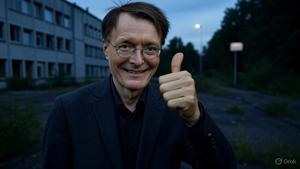 | Great Success: Helios Clinic Shuts Down!Who would have thought? The decisions of the widely beloved former Federal Health Minister Karl Lauterbach are finally bearing fruit.... zum Artikel |
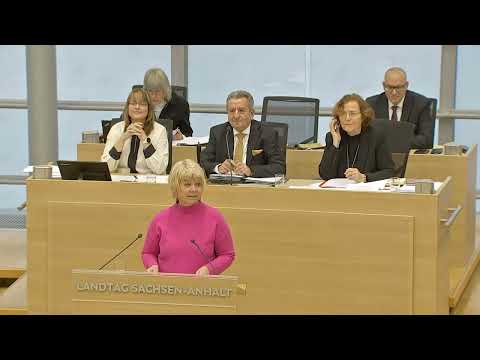 | Citizens’ Councils in Saxony-Anhalt: A desperate attempt to regain trust – or just another alibi instrument?Trust in the political class has reached a low point in Germany. Only about one in four citizens still seriously believes that politicians intend to keep their campaign promises (A... zum Artikel |


|
Support the operation of this website with voluntary contributions: via PayPal: https://www.paypal.me/evovi/12 or via bank transfer IBAN: IE55SUMU99036510275719 BIC: SUMUIE22XXX Account holder: Michael Thurm Shorts / Reels / Kurz-Clips Imprint / Disclaimer |