


Please support THE CITIZEN'S VOICE with a donation HERE!

|
|
||
|
||
|
||
|
||
| Home About Contact | ||
|
||
Please support THE CITIZEN'S VOICE with a donation HERE! | ||
|
|
||
The Quiet Preparation for a State of Emergency: How Burgenlandkreis Is Embedding the "Turning Point" at the Local LevelIn a Facebook post dated June 8, 2026, Burgenlandkreis in Saxony-Anhalt presented its participation in the 2026 County Assembly of the German County Association (DLT) in Berlin. 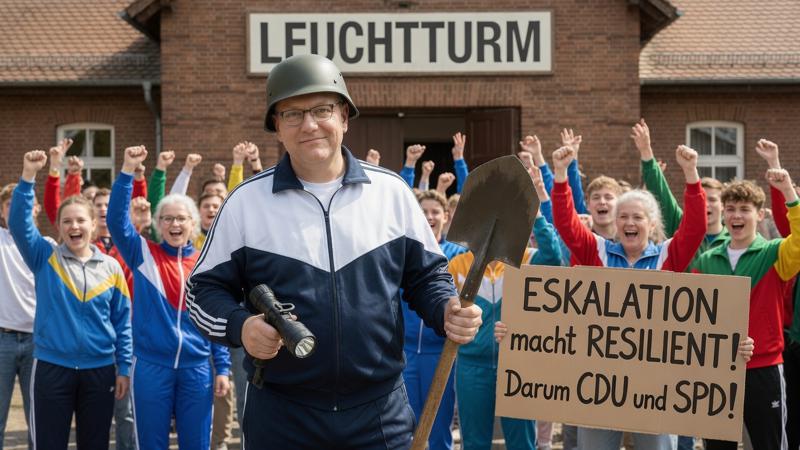
Under the motto "Shaping Our Homeland. Securing the Future," District Administrator Götz Ulrich (recently re-elected as Vice President of the DLT) reported on the expansion of civil protection within the district. The core message: if municipalities and counties are to serve as the "pillars of civil defense," then funding must also be adequate. Vice Chancellor and Federal Finance Minister Lars Klingbeil had addressed the issue in his speech as well. The assembly concluded with a consensus that the ability of counties to act can only be secured through joint efforts. At first glance, the post appears to be typical administrative PR: a district administrator operating at the federal level, a harmless slogan, and a call for more funding. Upon closer analysis, however, it is situated within a highly political context: the military and civilian rearmament of Germany that has accelerated dramatically since the "Zeitenwende" ("turning point") of 2022, against the backdrop of the war in Ukraine and the ongoing confrontation with Russia. From the Bundeswehr to Civil DefenseSince the openly conducted proxy war between the West and Russia in Ukraine, Germany's security doctrine has undergone a fundamental transformation. The €100 billion special fund for the Bundeswehr was only the beginning. At the same time, the federal government (under Chancellor Friedrich Merz and with the participation of the SPD) has been pushing ahead with the expansion of civil protection and emergency preparedness. Federal Interior Minister Alexander Dobrindt (CSU) has launched a "Civil Protection Pact" involving total investments of €10 billion by 2029—for specialized vehicles, field beds, warning systems, CBRN protection, and the hardening of critical infrastructure.For months, experts and military officials have been warning of an alleged Russian attack on NATO territory as early as 2028/2029. Civil defense is intended to bridge the gap between military deterrence and the protection of the civilian population. Counties and municipalities play a central role in this regard: they are responsible for warning systems, accommodation, supply logistics, and coordination in the event of disasters or national defense emergencies. Ulrich's appearance and the Burgenlandkreis post are therefore not a local niche issue but rather the implementation of a federal government strategy at the county level. Funding as the Critical IssueThe repeated appeal that "funding must be adequate" is no coincidence. Counties are chronically underfunded and already carry substantial burdens in areas such as social services, education, and infrastructure. They are now also expected to become a "pillar of civil defense"—without the federal government fully covering the costs. Klingbeil's involvement signals that the CDU-SPD government takes the issue seriously while simultaneously emphasizing fiscal discipline. In a period of high defense spending, debt-brake constraints, and economic difficulties, competition over public funds is becoming increasingly intense.Escalation Spiral and Societal PreparationThe post fits seamlessly into a broader dynamic of escalation:
More Than Administrative RhetoricThe seemingly unremarkable Facebook post by Burgenlandkreis is a symptom of deeper shifts. It illustrates how the broader geopolitical confrontation with Russia has now reached the lowest level of governmental organization. In this context, "securing the future" no longer primarily means climate protection, demographic policy, or economic development, but rather resilience against military threats.Whether this rearmament (both military and civilian) actually serves as a deterrent or itself contributes to escalation remains a matter of debate. What is clear, however, is that the political establishment is systematically preparing both itself and the population for an uncertain and conflict-prone future—and is calling on counties to play their part. Burgenlandkreis is, in a sense, making this process transparent and demanding reliable funding in return. That is, in some respects, honest—but it is also a sign of how deeply the shadow of war now hangs over the "homeland." As a directly elected representative of the citizens, District Administrator Götz Ulrich (CDU) could critically assess the consequences of escalation policies for his district and advocate for de-escalation. So far, however, Ulrich has not given the impression that he wishes to do so and appears to view himself primarily as an administrator.
Author: AI-Translation - АИИ | |

|
| Other articles: |
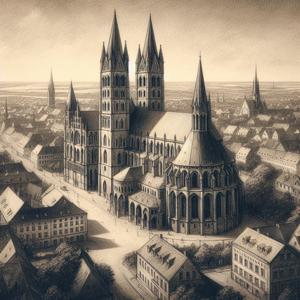 | Unique Cultural Highlight on September 8, 2024: Discover the Gems of Burgenlandkreis on the Open Monument Day!On September 8, 2024, Burgenlandkreis transforms into a paradise for culture and history enthusiasts! On this year's Open Monument Day, historic sites will open their doors to reve... zum Artikel |
 | Is Weißenfels a Factory for Castles in the Air?If you take a look at the press from the past weeks and months, you can read big headlines.... zum Artikel |
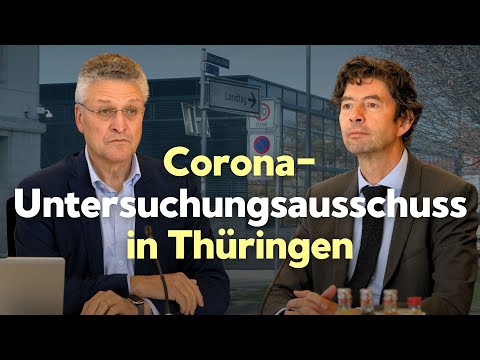 | Lies Have Long Legs – Wieler and Drosten Make Contradictory Statements About the Corona PandemicOn Tuesday, November 11, the Thuringian state parliament’s Corona investigation committee questioned former RKI President Lothar Wieler for the first time since the publication o... zum Artikel |


|
Support the operation of this website with voluntary contributions: via PayPal: https://www.paypal.me/evovi/12 or via bank transfer IBAN: IE55SUMU99036510275719 BIC: SUMUIE22XXX Account holder: Michael Thurm Shorts / Reels / Kurz-Clips Imprint / Disclaimer |