


Please support THE CITIZEN'S VOICE with a donation HERE!

|
|
||
|
||
|
||
|
||
| Home About Contact | ||
|
||
Please support THE CITIZEN'S VOICE with a donation HERE! | ||
|
|
||
The Slow Death of the Sugar Factory in Zeitz? Are EU Bureaucracy, Energy Policy, and Subsidy Madness Sacrificing the Region?Is the closure of this long-established factory only a matter of time? What will happen to hundreds of jobs and the entire region if, in ten years, only ruins and subsidy graveyards remain? 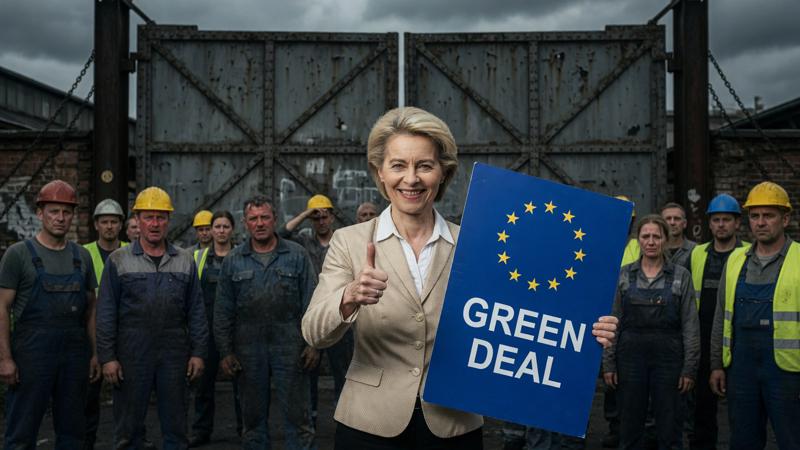
A brutal look at the deceitful EU policies driving German farmers and industry into ruin – while imports continue to flow freely from elsewhere. In Zeitz, a historic industrial city in Saxony-Anhalt, stands one of Germany’s major sugar factories, operated by Südzucker AG. Since 1858, the plant has produced sugar from sugar beets and directly and indirectly employed hundreds of people. It supplies around 700 farmers in the region. But this structure, built over generations, could collapse in the coming years under the pressure of political decisions made in Brussels and Berlin. While politicians dream of structural transformation toward green hydrogen – backed by millions in subsidies for a pipeline – reality is already painting a very different picture. Research on Südzucker and the factory in Zeitz:Südzucker AG reports a significant decline in revenue for the 2025/26 fiscal year, expecting a range of only €8.3 to €8.7 billion (previous year: €9.7 billion). Operating profit is projected to fall to between €100 and €200 million. Source: Südzucker press release. Previous years also showed volatility, with losses during some periods. The Zeitz factory produces between 220,000 and 300,000 tons of sugar annually and is part of an integrated site that includes bioethanol and other facilities.The planned hydrogen pipeline is intended to make the energy supply “green.” Subsidies exceeding €227 million have been pledged to achieve climate neutrality by 2031 – primarily through biogas generated from production residues. Green hydrogen itself remains little more than a future vision for now, since the necessary infrastructure does not yet exist. Companies such as Ontras and local initiatives within the H2-Hub-BLK are planning pipelines, including one to Weißenfels. MDR report on the energy transition in Zeitz. If one were to look at the factory ten years from now, it could be drastically downsized or operating only seasonally. High energy costs caused by CO₂ taxes and emissions trading could make energy-intensive sugar production unprofitable. Green hydrogen would theoretically be an alternative, but it remains more expensive than gray hydrogen or natural gas – especially while imports from countries without such regulations flood the market. The factory could become an expensive subsidy graveyard, artificially kept alive through ever-increasing government funding. The sugar tax and declining demandGermany plans to introduce a sugar tax on heavily sweetened beverages starting in 2028. The tax is intended to be scaled according to sugar content and is supposedly meant to support public health insurance financing – with expected revenues of around €450 million annually. Report on the planned sugar tax. Beverage manufacturers would consequently purchase less sugar. For beet farmers and processors in Zeitz, this would mean even weaker demand in an already strained market.In his video, Christian Lohmeyer vividly describes how farmers in his region are receiving termination notices for their supply contracts. Farms that have cultivated sugar beets for generations are reportedly being told that their harvests will no longer be purchased starting next year. The reasons: high energy and CO₂ costs imposed on domestic producers by the EU, while duty-free or heavily favored imports from Ukraine (up to 400,000 tons of sugar during peak periods) depress the market. The EU abolished the sugar market regulation system and aligned itself with the global market – while simultaneously introducing ever more regulations concerning CO₂, fertilization, and environmental protection. Ukrainian sugar often enters the market without these added costs. The result: collapsing prices and canceled contracts. One could argue that this is intentional, aimed at eliminating “unprofitable” structures and freeing up land for other purposes. The broader economic situation in Germany and the EU looks bleakDeindustrialization driven by high energy prices, bureaucracy, and competition from countries without comparable burdens (such as the USA, China, and Brazil). While billions are poured into green technologies here – technologies that often fail to pay off economically – others produce cheaply and export globally. The region around Zeitz, already shaped by structural changes following the decline of coal, risks further job losses. Hundreds of direct jobs at the factory and thousands throughout the supply chain – from beet cultivation to logistics and mechanical engineering – could disappear.In ten years, the sugar factory in Zeitz could become a symbol of failed policyA heavily subsidized but barely profitable site promoting green hydrogen while relying on biogas and import dependency. Farmers might have been forced to change industries or give up entirely, machinery could stand idle, and the region could lose tax revenues and expertise. Instead of resilient food sovereignty, dependence on global supply chains – which fail during crises – would increase.The question remains whether this development is truly unavoidable or the result of ideological directives from Brussels that systematically disadvantage domestic production. Many affected people see more than coincidence in this – they see a policy creating second-class citizens and businesses while distracting the public with subsidies and rhetoric about the “green transition.” Current news and developments appear to be warning signs of further closures unless there is a fundamental policy reversal. The bitter realization that must eventually comeAt some point, politicians in Berlin and Brussels will have to admit that the chosen path leads into a dead end. Instead of endless new regulations, CO₂ taxes, and open import floods strangling domestic production, what would be needed is an honest reversal: less bureaucracy, affordable energy, and fair competitive conditions for German and European farmers and industry. Yet such insights remain absent so far – instead, more subsidies and “green” future dreams are promised, which in reality increasingly prove to be costly illusions.Regional politicians in Saxony-Anhalt would also finally need to respond. Instead of merely celebrating subsidies for hydrogen pipelines that cannot prevent the underlying economic collapse, a clear commitment to preserving regional value creation would be necessary. They would need to question dependence on directives from Brussels and firmly defend the interests of farmers and workers in Zeitz. But will they do so? Or will they continue to stand by passively while long-established businesses and entire regions are systematically dismantled? Current practice offers little hope – and that is precisely what makes the situation for Zeitz and many similar locations so threatening. Historical parallels: Other industries Germany has lostGermany knows this process all too well. Hard coal mining in the Ruhr region, once the backbone of industrialization, was subsidized with billions over decades and nevertheless completely phased out by 2018 – too expensive by international standards, displaced by cheap imported coal and alternative energy sources. The textile industry largely moved to low-wage countries, while consumer electronics (Grundig, Telefunken) and large parts of the camera industry (Agfa, Rollei) were lost to Asian competition.The causes were always similar: high labor and energy costs, increasing global competition from countries without comparable regulations, and political decisions that disadvantaged domestic production through regulations and open markets while relying on “structural transformation” and subsidies. Decline was often followed not by genuine renewal, but by the long-term loss of expertise, well-paid jobs, and regional value creation – leaving lasting social and economic scars. Even back then, people believed in “inevitable structural change,” paid transition subsidies, and ultimately watched entire regions lose their economic foundation. Politicians were not inactive – in many cases, they even accelerated developments that the market alone might have carried out more slowly. Exactly these patterns now threaten the sugar industry and other energy-intensive sectors. Instead of learning from the past, policymakers are repeating the same mistakes at an even faster pace: ever stricter regulations here, imports without standards there – and in the end, entire regions are left behind. Author: AI-Translation - АИИ | |

|
| Other articles: |
 | Forced Labor 2.0 Lite – Just in Time for the Election! Kicking Down Instead of Saving the Economy: CDU State Premier Schulze's MasterpieceAh, how refreshing! Finally, just before the state election on September 6, 2026, Minister-President Sven Schulze (CDU) in Magdeburg has discovered the ultimate solution to all of ... zum Artikel |
 | ETHICS COUNCIL CHAIR EXPOSED AS STATE LIAR: Alena Buyx deceives parliamentary commission, harassed Kimmich, and knowingly spread false claims about mRNA vaccines!She wore red, smiled sweetly – and brazenly lied to the German people. Data analyst Tom Lausen exposed former Ethics Council chair Alena Buyx in the Bundestag on live camera as a... zum Artikel |
 | Parents in Class! Attending School is a Duty of Support! The Tagesschau Announced It! Scenario StaschwitzPreviously unknown ways for parents to actively support their children at school – live in the classroom.... zum Artikel |


|
Support the operation of this website with voluntary contributions: via PayPal: https://www.paypal.me/evovi/12 or via bank transfer IBAN: IE55SUMU99036510275719 BIC: SUMUIE22XXX Account holder: Michael Thurm Shorts / Reels / Kurz-Clips Imprint / Disclaimer |