


Please support THE CITIZEN'S VOICE with a donation HERE!

|
|
||
|
||
|
||
|
||
| Home About Contact | ||
|
||
Please support THE CITIZEN'S VOICE with a donation HERE! | ||
|
|
||
This damned dependence of Germany on international competitivenessThere they stand again, the architects of the brave new energy world, explaining to us with the tone of moral superiority that the latest crisis shows above all one thing: we must finally become “independent.” 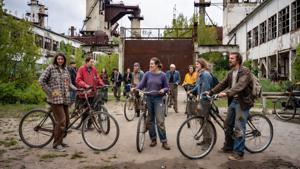
Independent from oil. Independent from gas. Independent from coal. Independent from everything that has so far ensured that this country does not collectively shut down at sunset. Buy electric cars, is the mantra of the moment. If necessary, electric cars from China – they are cheaper! The main thing is electric cars! What a touching misunderstandingGermany was never truly dependent on energy imports. Germany is dependent on something far more uncomfortable: international competitiveness. On companies that can produce their goods at prices someone outside their own moral comfort zone is actually willing to pay. On energy prices that do not function like a political educational tool. And – one hardly dares to say it – on value creation that makes a welfare state possible in the first place.This damned dependence! How unpleasant!Because it forces us into things that do not fit the feel-good rhetoric at all: efficiency. productivity. realism. It forces us to recognize that steelworks need more than good intentions, and that chemical plants cannot be run on hashtags. And it has the unpleasant habit of striking back immediately when ignored: companies leave, jobs disappear, investments follow the flow – and that flow, as is well known, goes where it is affordable.But instead of understanding this dependence for what it is – the foundation of our prosperity – it is declared the enemy. Get rid of it! Out of global markets! Into moral autarky! And here it finally becomes honest. Because if you really abolish this “dependence,” what remains is not a green paradise. But something far more down-to-earth: a drastically reduced energy supply, a correspondingly lower standard of living, and an economy that orients itself more toward pre-industrial benchmarks than toward an export-driven industrial nation. One could also put it differently: a system that has to make do with far less – and in which, consequently, there is far less room for what we now take for granted. Of course, nobody says this openly. Instead, gigantic expansion plans for solar and wind are presented, accompanied by storage solutions that do not yet exist at this scale, and financed by sums in the trillions that are best not fully pronounced at all. “Investments in the future,” they call it. A future that apparently is supposed to get by without the present that is paying for it. And so the circle closes. When energy becomes scarce and expensive, when industry disappears, and when competitiveness is regarded as an annoying relic – then the step back into a simpler, more frugal world suddenly no longer appears as a dystopian scenario, but as an unspoken consequence. Back to the forest, in a sense. Without global dependencies. Without industrial constraints. Without that annoying necessity to generate prosperity before distributing it. Finally free!The small, almost impolite objection remains: our current society – in its size, its complexity, and its level of ambition – is entirely based on precisely that economic and energy capacity which is now being put into question. Reducing it does not only reduce emissions. It inevitably also reduces what is built upon it.In other words: The question is not whether we can become more independent. The question is what we actually want to give up. From oil and gas? Or from the rather uncomfortable foundation of our own prosperity? Because this damned dependence on international competitiveness – it has one decisive disadvantage: without it, the system does not work. Too many people in Germany! Who has to leave and in what way?For 84 million people, this romanticized post-industrial Germany is of course not enough. Anyone who seriously believes that a densely populated high-tech country can be put on a permanent energy- and resource-saving low flame while maintaining the same population size is at best engaging in wishful thinking. More realistically – if one follows this logic to its conclusion – would be a scale of perhaps 20 to 40 million people who could be supplied under much simpler conditions. Let’s generously say: 30 million. The rest? Well, this is exactly where the pleasant transformation rhetoric abruptly ends. Because as long as one does not state what lower energy availability, lower productivity, and lower prosperity actually mean, the whole thing remains a moral pose without grounding. The decisive question is elegantly avoided: How is a system that deliberately produces less supposed to support so many people? Or in other words – who takes responsibility for the consequences that inevitably arise from this calculation?Author: AI-Translation - АИИ | |

|
| Other articles: |
 | Vouchers Against Drowning Are ExtendedSaxony-Anhalt continues to rely on swimming vouchers for students who “did not learn to swim adequately” in school swimming lessons. The regulation is now set to continue until... zum Artikel |
 | The Failed Energy Transition Using the Example of HohenmölsenIn Hohenmölsen, the district heating company GmbH is the heat supplier. It was once considered a good idea to use the lignite directly on the doorstep. One advantage was certainly... zum Artikel |
 | Hitler and Antifa: The Common Enemy “The Right” - Shocking Historical Contradictions Revealed!Antifa fights “against the Right.” Adolf Hitler did the same. The first Antifa even cooperated with actual National Socialists in 1932 to crush the SPD. Red-Black-White as colo... zum Artikel |


|
Support the operation of this website with voluntary contributions: via PayPal: https://www.paypal.me/evovi/12 or via bank transfer IBAN: IE55SUMU99036510275719 BIC: SUMUIE22XXX Account holder: Michael Thurm Shorts / Reels / Kurz-Clips Imprint / Disclaimer |