


Please support THE CITIZEN'S VOICE with a donation HERE!

|
|
||
|
||
|
||
|
||
| Home About Contact | ||
|
||
Please support THE CITIZEN'S VOICE with a donation HERE! | ||
|
|
||
The Invisible Citizen Participation – The Citizen Advisory Board on Structural Change That Nobody Knows About!On March 23, 2026, the district council committee on structural change in the Burgenlandkreis invited two representatives of the Citizen Advisory Board. Spokesperson Christiane Meyer and former spokesperson Thorsten Kahl were allowed to present their work. 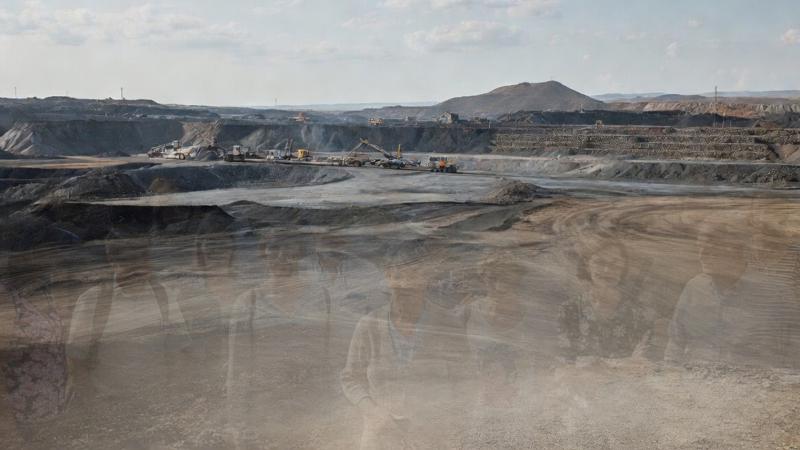
It was a rare moment of direct exchange in a committee that usually meets mostly among themselves. Politics likes to use this advisory board as proof that structural change is being shaped “close to the citizens” and “with participation.” But the reality is different: the board remains largely invisible, its work barely reaches the public – and real co-determination for ordinary citizens hardly takes place. The video starts from the moment the Citizen Advisory Board is introduced: A Randomly Selected Committee with Good IntentionsThe Citizen Advisory Board for structural change in the Central German Coal Region (Saxony-Anhalt) consists of 20 randomly selected citizens from the affected districts, including the Burgenlandkreis. Half men, half women, proportionally selected by region. They meet about four times a year, visit projects on site, listen to expert speakers, and provide recommendations on funding initiatives. They see themselves as a “link” between administration and local citizens – people who live and work in the region and therefore have a head start on some decision-makers.In the committee, it sounded constructive and refreshing: the board members speak “plain German,” not political jargon. They can express criticism without party considerations – for example, blockages in the heritage authority or projects whose structural change relevance seems questionable. They report good conversations, compromises despite political diversity (“from right to left”), and a benevolent atmosphere that some politicians might envy. They prioritize topics, categorize conflicts, and bring everyday-life perspectives that often get lost in administrative files. That sounds like real participation. But this is exactly where the problem lies. Fear of Public ExposureAfter the session, Christiane Meyer described the difficulties with the press: reports were often inaccurate or distorted. When I offered to publish the board’s texts unchanged on buergerstimme.net and conduct a video interview, she responded cautiously. She is not available for videos – one “risks one’s (social) life” by speaking publicly. “Some say you’re not left enough, others say you’re not right enough.” A “terrible time,” during which she preferred to stay away from social media and the broader public. The board members are more afraid of the public.This is understandable in polarized times. But it has fatal consequences: if even the spokesperson avoids public exposure, the advisory board remains an insider circle. Its work becomes intangible. Ordinary citizens hardly know what is discussed, which projects are viewed critically, and where recommendations have an effect – or not. Political Alibi Function Instead of Real Co-DeterminationPolitics takes advantage of this. In committee meetings and press releases, the Citizen Advisory Board is often cited as proof of “citizen participation.” “Structural change is for the people in the region – that’s why we have the Citizen Advisory Board.” Something along these lines was said on March 23. But in the district council committee meetings on structural change, there is no citizen question time. When I filmed the session and tried to ask a question, the chairperson Elke Simon-Kuch (CDU) did not allow it.The board is advisory. It gives recommendations, is listened to – but does not decide. Many processes remain a “black box” even for the board members themselves: responsibilities are opaque, delays (for example at the Investment Bank) are incomprehensible, bottlenecks unclear. Members gradually learn administrative logic, while ordinary citizens have no insight at all. Transparency is desired, but scarce. At the same time, very little information reaches the public. Press reports are rarely accurate, and the board itself remains reserved. The result: a committee that officially brings in “citizen perspectives” is largely unknown to the population. It becomes an alibi event. Politics can say, “We have a Citizen Advisory Board – so everything is citizen-friendly.” Citizens themselves remain excluded. What’s Missing: Real Visibility and AccessSelecting members by lottery is a good approach to include more than just the usual suspects (association officials, party-affiliated people). The diverse mix and ability to compromise are strengths. But without consistent public relations – minutes, clear reports, regular citizen dialogues that go beyond events for the initiated – the potential fizzles out.Structural change involves billions. It will transform the region long-term: jobs, infrastructure, landscape, quality of life. If politics sells it as a “citizens’ matter,” it must offer more than an advisory board that makes itself invisible and appears only sporadically in committee meetings. Without citizen question time, broad publication of its work, and bold external representation, participation remains invisible. Christiane Meyer and her colleagues deserve respect for their commitment – despite frustration with the administration, despite the polarized climate. But that’s exactly why more is needed: platforms that publish their texts unaltered, spaces for citizens to ask direct questions, and politics that enables real transparency and leads by example. As long as the Citizen Advisory Board remains invisible, it primarily serves as a nice narrative. But structural change needs more than nice words. It requires visible, tangible, and courageous citizen participation – not just on paper or in closed rounds. Author: AI-Translation - Michael Thurm | |

|
| Other articles: |
 | Never again low energy prices under CDU, SPD and Greens - Three state premiers, structural change, Lake Geiseltalsee and a whole lot of hot airSven Schulze (CDU), Michael Kretschmer (CDU) and Mario Voigt (CDU) met on 30 July 2026 at Lake Geiseltalsee, the showcase residual pit of lignite mining, and grandly announced a â€... zum Artikel |
 | Hypocrisy in the Bundestag: Pistorius Preaches Service, But Does Not Lead by ExampleHow credible is a government that demands morality in the armed forces but does not practice it itself?... zum Artikel |
 | Childcare Becoming More “Valuable” – City Plans to Raise Daycare FeesYes, this truly warms the heart of every family with small children: Childcare in the City of Hohenmölsen’s daycare centers is set to become more valuable – meaning more expen... zum Artikel |


|
Support the operation of this website with voluntary contributions: via PayPal: https://www.paypal.me/evovi/12 or via bank transfer IBAN: IE55SUMU99036510275719 BIC: SUMUIE22XXX Account holder: Michael Thurm Shorts / Reels / Kurz-Clips Imprint / Disclaimer |