


Please support THE CITIZEN'S VOICE with a donation HERE!

|
|
||
|
||
|
||
|
||
| Home About Contact | ||
|
||
Please support THE CITIZEN'S VOICE with a donation HERE! | ||
|
|
||
Only 30 Billion Investment for the Energy Transition for the Burgenlandkreis – District Buys Land in MauritaniaThe energy transition continues to be an important topic for politics because the climate must still be protected and global warming must be stopped. In a few days there will be a press conference in the Burgenlandkreis where the District Administrator, Götz Ulrich, will present the concrete plans. 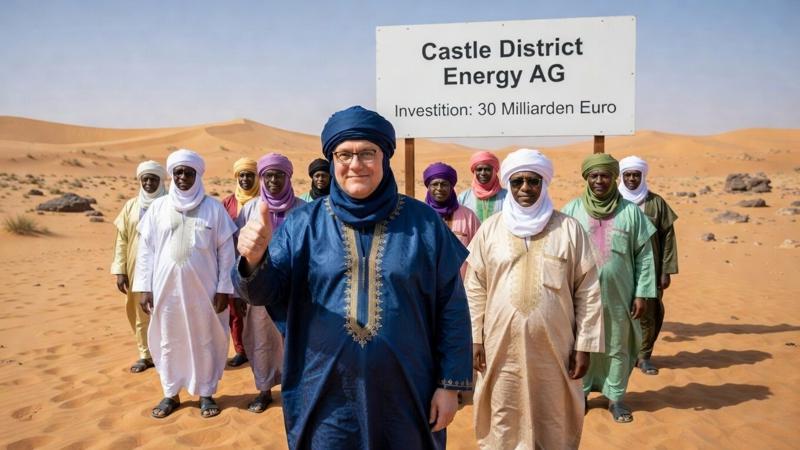
District Administrator of the Burgenlandkreis Götz Ulrich (CDU): Ladies and gentlemen, esteemed members of the press. Germany is lagging behind its targets for reducing the greenhouse gas CO2. In the past year, progress in reduction was minimal. We must therefore significantly intensify our efforts if we want to be climate-neutral by 2045. In the city council of Hohenmölsen, a citizen provided an important food for thought regarding the green district heating that is planned there. It became clear that with the ideas currently on the table, even the heat supply cannot be made CO2-neutral. This shows how important citizen participation is in such matters. At present, the focus is on converting electricity generation to renewable energies, but electricity accounts for only 20 percent of the total energy demand. We therefore need more radical steps to achieve the climate target. We met with students from the vocational schools in the Burgenlandkreis who are being trained in the fields of energy and electrical engineering, and we used artificial intelligence. Our special thanks therefore go once again to the head of the vocational schools, Mr. Jörg Riemer. The task was to determine how large the total energy demand of the Burgenlandkreis is and how we can cover it. The Burgenlandkreis has a total energy demand of approximately 13 TWh per year. This includes electricity, transport, commerce, households, and industry. The major problem, however, is storing the energy that is required in winter and during periods of low renewable output—when neither the sun shines nor the wind blows. Therefore, significantly more energy must be generated because losses also occur during storage and recovery. We calculated everything using a population of 200,000 inhabitants, because we want to achieve growth in the district again. In addition, such systems cannot be designed right on the edge; a buffer is always necessary. This resulted in an electricity generation requirement of a good 24.3 TWh per year. Another question concerned land consumption. This is a very sobering, or even alarming figure. If we generate electricity 50% from wind and 50% from solar, we would need almost 1,300 wind turbines which, due to wind shadowing, would have to be distributed over an area of 642 km². In addition, 167 km² would be required for photovoltaic installations. That makes 810 km², or 57% of the district’s area, that would have to be used for energy generation. The Burgenlandkreis has a total area of 1,414 km². In reality, we would also have to factor in that the Burgenlandkreis would need to produce the energy required by larger cities such as Halle, Leipzig, and so on. This means that the area of the Burgenlandkreis alone is not sufficient for energy generation. To store hydrogen in sufficient quantities for the Burgenlandkreis alone would require an additional land area of 11 km². If we used batteries, it would be 17 km². If we used synthetic diesel as the storage medium, approximately 0.3 km² of land would be required. This is a problem that some critics of the energy transition have already pointed out. In other words, we cannot solve this problem within Germany alone. Of course, we can discuss how much these figures could be improved through energy savings. However, that would likely amount to only a few percent and would not make a decisive difference, as the saying goes. But the probably even bigger problem is the cost. Quite frankly, the numbers will knock your socks off. If we were to use hydrogen as the storage medium, the total investment costs for the energy supply of the Burgenlandkreis alone would amount to approximately 77 billion euros. Assuming 200,000 inhabitants, that is about 385,000 euros per resident. Hydrogen must be compressed and cooled, which is very energy-intensive. If we relied on battery technology, this would mean a total investment of 1.7 trillion euros. Or put another way: 8.6 million euros per resident. The cheapest option is the production of synthetic diesel as storage. In that case, we arrive at an investment sum of “only” 38 billion euros. That would be about 190,000 euros per capita. As you can see, these are indeed astronomical sums that are on the table if we want to achieve the climate targets. But as mentioned before: the available land area is not sufficient. In this sense, Germany is too small to manage its own energy supply solely with wind and solar power. We therefore considered what alternatives might exist. Nuclear energy is still politically unwanted. We have therefore decided to acquire land in Mauritania, in northwest Africa, and to generate the necessary electricity there using photovoltaic systems, with which synthetic diesel will be produced. The Burgenlandkreis will then be completely converted to this energy source. This may shock some eco-activists because it lowers efficiency. Yes, that is correct—but besides ecology, economics is also important. Our calculations assume that with an overall efficiency of about 50%, an energy quantity of 32.4 TWh would be required. However, the number of hours of sunshine in Mauritania is much greater than in Germany. We would need an area of 210 km² there for photovoltaics and an additional area of about 10 km² for the power-to-liquid plant. As the purchase price for the land area in Mauritania, we will transfer 4% of the annual diesel production to Mauritania. This will promote development in that country and save us some investment costs. A tanker will then transport approximately 100,000 tons of this diesel to Germany 14 times a year. From the port, it will travel by rail to our district. Storage will then take place in a decentralized manner. The power plants that currently use natural gas will be converted to burn this diesel. Diesel has an energy content of approximately 11 kWh per liter. We assume that this will reduce heating costs to 4 cents per kWh. Citizens and companies in the Burgenlandkreis will be able to refuel the synthetic diesel at prices of approximately 25 cents per liter. We have already decided, together with the municipal utilities of Weißenfels and Zeitz, the Technische Werke Naumburg, and Fernwärme GmbH in Hohenmölsen, to merge these companies into a single entity and to implement this project through the new CADENAG. CADENAG stands for Castel District Energy AG. The area in Mauritania will legally belong to the Burgenlandkreis, and thus to Germany and the EU. This means that the synthetic diesel produced there will, in formal legal terms, not leave the Burgenlandkreis when it is transported to us. As a result, no customs duties or taxes will apply. The power plants of CADENAG will therefore use the diesel produced by the company itself within the same corporate structure. We are examining how the other villages, towns, and municipalities in the district can also be integrated in order to reduce prices there accordingly. It is important that we create facts before the upcoming state election in September. Because if the AfD is successful in the election, it cannot be ruled out that such projects will no longer be implemented, since the AfD has a different view on climate change. The state government, the federal government, and the EU must therefore immediately provide the necessary investment sum of 30 billion. Otherwise, we need not think any further about any climate targets. The available land area in Germany is simply not sufficient. Other districts and cities could possibly act in the same way in other regions—Saudi Arabia, Egypt, and so on. The advantage of such a global distribution would be that if temporary failures were to occur in one or another location, these could be compensated for within Germany. 30 billion euros for the current population of 173,000 residents is certainly no small matter. But that is simply the price of the energy transition. If Germany, if the state and federal governments, if the EU want it, then this price must be paid. We must be honest about this and tell citizens the unvarnished truth. The salami tactics used so far and the previous ideas are nothing more than window dressing. Thank you for your attention! Author: AI-Translation - АИИ | |

|
| Other articles: |
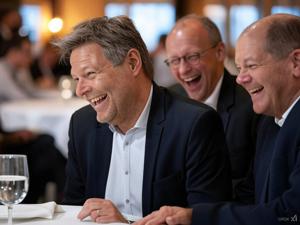 | They Are Breaking Their Election Promises Even Before the ElectionYou see them everywhere right now – the promises about how everything will get better once they are back in government. But it is already clear that these promises – to put it ... zum Artikel |
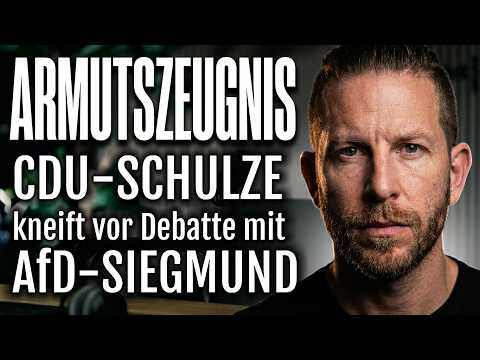 | The cowardly CDU Minister-President Sven Schulze backs out of the debate with Ulrich Siegmund (AfD)In a functioning democracy, political competition should be decided by arguments—not by evasion, rule changes, and hysterical warnings about the "downfall of Western civilization... zum Artikel |
 | Commemoration of the US Army Bombing of the Village of Rehmsdorf 80 Years AgoOn January 16, 2025, the local historian of the village of Rehmsdorf invited to a memorial event commemorating the US Army bombing of the village 80 years ago, featuring tea, music... zum Artikel |


|
Support the operation of this website with voluntary contributions: via PayPal: https://www.paypal.me/evovi/12 or via bank transfer IBAN: IE55SUMU99036510275719 BIC: SUMUIE22XXX Account holder: Michael Thurm Shorts / Reels / Kurz-Clips Imprint / Disclaimer |