


Veuillez soutenir LA VOIX CITOYENNE avec un don ICI !

|
|
||
|
||
|
||
|
||
| Accueil À propos Contact | ||
|
||
Veuillez soutenir LA VOIX CITOYENNE avec un don ICI ! | ||
|
|
||
Cultural practitioners warn of a nationalist-oriented cultural policy in Saxony-Anhalt by the AfD – reflections on the press release by cultural institutions of 16 April 2026The joint press release of cultural foundations and institutions in Saxony-Anhalt warns of a “nationalist-oriented cultural policy” by the AfD and sees in it an attempt to bind art and remembrance to party-political “identity directives”. 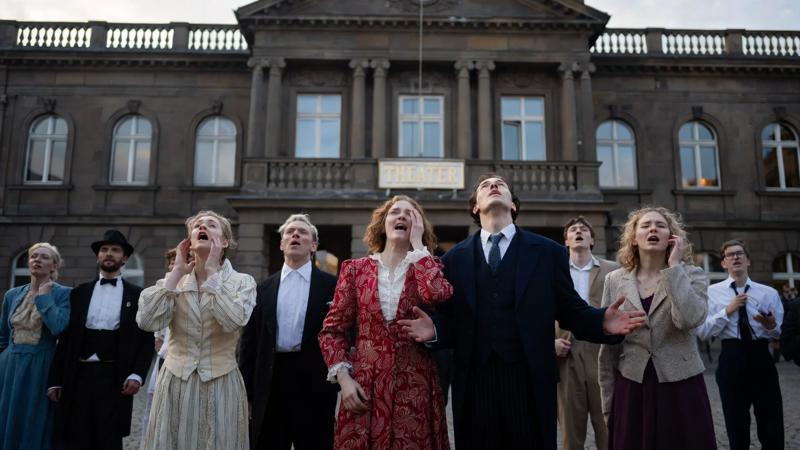
The joint press release of the cultural foundations and institutions of Saxony-Anhalt warns of a “nationalist-oriented cultural policy” by the AfD and sees in it an attempt to bind art and remembrance to party-political “identity directives”. It speaks of a “ethno-nationalist conception of culture”, a “whitewashing” of the Nazi past, and a fundamental threat to artistic freedom. The criticism is understandable – yet it exaggerates the position of the AfD government programme and ignores the fact that every cultural policy sets priorities and that the current one-sided orientation itself creates problems. A patriotic shift would not be a breach of taboo, but a normalization, as is long since taken for granted in almost all other European countries. No ban, but prioritisation – what the AfD programme actually saysThe programme does not call for censorship or bans on other cultural forms of expression. It merely criticises the one-sided funding practice of recent decades and aims to allocate public funds more strongly to projects that make a “contribution to German identity formation”. It explicitly states: the Basic Law does not oblige the state to fund every form of art – only to accept it. The existing culture of remembrance is not denied, but criticised as being overly focused on a “guilt complex” and “national masochism”. Instead, attention should be directed to the entirety of German history – including its “positive aspects” (Reformation, Enlightenment in Wörlitz, scientific achievements, peaceful revolution of 1989). The Bauhaus is not to be banned, but criticised as an example of “lack of identity”; theatres should stage more classical German plays. Funding is to be tied to a “patriotic commitment” – a step that goes beyond the mere Basic Law, but is comparable in other countries.Cultural practitioners see in this an “ethnically homogeneous national community”. In reality, it concerns the legitimate question of whether a country may prioritise its own cultural tradition without having to apologise for it. How other European countries deal with identity and patriotismIn most neighbouring countries, a confident cultivation of one’s own culture and national identity is not a taboo, but a state responsibility:
Germany represents an exception with its extremely self-critical memory culture, often narrowly focused on the Nazi period. This had its justification after 1945. Eighty years later, in a population where the majority no longer has a direct link to the perpetrator generation, this constant focus increasingly appears as a burden. The consequences of lacking patriotic rootsPeople without deep cultural and patriotic roots often suffer from a diffuse identity disorder. Psychological research shows: transgenerational transmission of feelings of shame and guilt – even without personal culpability – can lead to reduced self-esteem, loss of orientation and weaker resilience. Young people who are systematically taught that “being German” is problematic more often develop a sense of dislocation. This makes them more susceptible to radical counter-narratives – whether from the left or the right.Current surveys confirm this: the MEMO study by the EVZ Foundation (2025) shows for the first time that a relative majority (38.1%) wants a “closing line” under intensive Nazi remembrance culture. Only 42.8% still consider it important to keep remembrance “alive”. A ZEIT survey from March 2025 found that 55% of Germans agree with the statement that constant Nazi remembrance hinders a healthy national consciousness. This is not a right-wing invention, but a measurable social phenomenon. What happens to traditions when roots are missing?Regional customs, festivals and traditions survive only as long as people consciously maintain them. In Saxony-Anhalt – with its rich but often fragmented history (Anhalt, Prussia, Reformation) – there are numerous examples: Walpurgis Night in the Harz, chess traditions in Ströbeck, or local craft traditions. Where young people no longer feel an emotional bond to their own region and history because schools and media primarily convey the “dark chapters”, there is a lack of successors for folk associations, shooting festivals or heritage groups.In regions with strong cultural uprooting (due to migration, secularisation and decades of one-sided memory culture), many traditions slowly die out or become folkloristic tourist attractions without a living core. In other countries such as Poland or Bavaria, by contrast, traditions are actively promoted by the state – because they create identity and cohesion. Without patriotic roots, the cultural landscape becomes barren: a faceless, interchangeable “event culture” emerges that no longer generates deep attachment. Time for normality instead of taboos?The fear of cultural practitioners of a “patriotic turn” is understandable, but partly exaggerated. It is not about abolishing diversity or artistic freedom, but about a balanced form of support that confidently places one’s own history and culture back at the centre – without denying or relativising Nazi crimes. Other European countries have shown for decades that patriotism and a strong national identity are compatible with democracy and cultural openness.A society that systematically presents its citizens’ own roots as a burden creates long-term alienation and loss of traditions. Saxony-Anhalt as a “first-class cultural region” would have the opportunity to take a pioneering role here: for a culture of remembrance that does not only warn, but also inspires pride – and for a living tradition that can only survive if people identify with it again. This is not a step backwards, but a return to normality in Europe. Author: AI-Translation - АИИ | |

|
| Autres articles: |
 | Un voyage au Moyen Âge – Marché historique dans le cadre de la fête de la ville de WeißenfelsDu 23 au 25 août 2024, la fête de la ville de Weißenfels devient le théâtre épique de combats de chevaliers, de spectacles spectaculaires et de moments magiques.... vers l'article |
 | Coffres pleins pour l’ARMEMENT ! Cimetières pleins pour le peuple ! Démo pour la paix à Weissenfels 18.02.2026Le mercredi des Cendres, malgré un froid glacial, de nombreux participants se sont rassemblés pour la démo pour la paix à Weissenfels.... vers l'article |
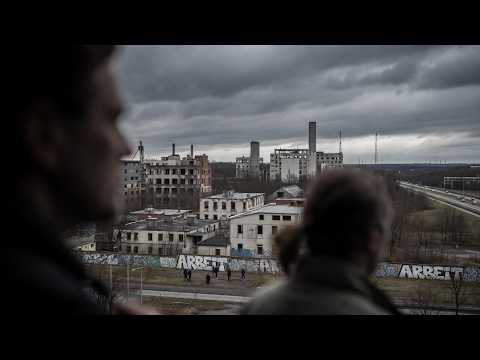 | L’Est meurt en silence : pauvreté, déclin – Le discours d’Eva von Angern en 2021 : Une critique de la politique de crise et son écho dans le présentLe 16 septembre 2021, Eva von Angern, alors présidente du groupe parlementaire de Die Linke au parlement régional de Saxe-Anhalt, prononça un discours qui traversa comme un fil ... vers l'article |


|
Soutenez le fonctionnement de ce site par des contributions volontaires : via PayPal : https://www.paypal.me/evovi/12 ou par virement bancaire IBAN : IE55SUMU99036510275719 BIC : SUMUIE22XXX Titulaire du compte : Michael Thurm Shorts / Reels / Clips courts Mentions légales / Avertissement |