

Please support THE CITIZEN'S VOICE with a donation HERE!

|
|
||
|
||
|
||
|
||
| Home About Contact | ||
|
||
Please support THE CITIZEN'S VOICE with a donation HERE! | ||
|
|
||
600 Kilometers of Close Contact with Citizens – but Apparently Too Far for an EU DeadlineMinister-President Sven Schulze (CDU) cycled more than 600 kilometers through Saxony-Anhalt, visited around 50 stops, and sought conversations with citizens. An impressive athletic achievement. Yet when it came to an EU deadline that had been known for years, the state government apparently did not move quite so quickly. Now, a potential multimillion-euro liability is looming. 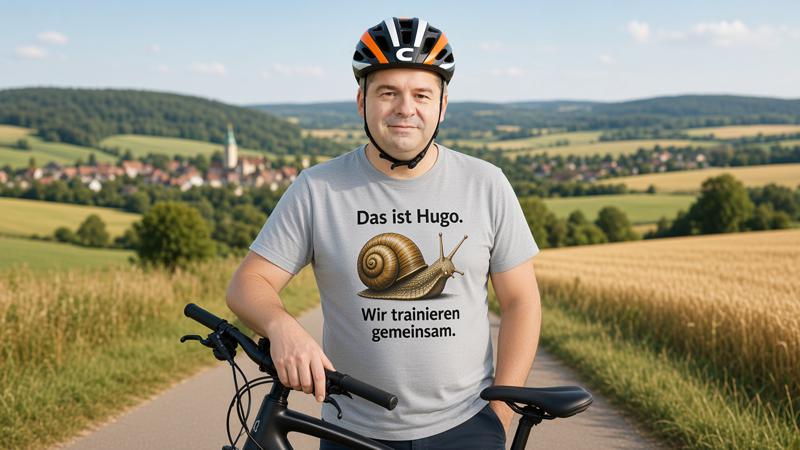
You Have to Be Able to Set PrioritiesApparently, Sven Schulze (CDU) can. More than 600 kilometers by bicycle through Saxony-Anhalt, around 50 stops, visiting businesses, shaking hands, talking to people, taking photos—in other words, demonstrating plenty of closeness to the citizens. And 600 kilometers is quite a distance to cycle. That deserves respect.And presumably, you really do get a different perspective on Saxony-Anhalt from a bicycle. You see villages, schools, roads, businesses, and perhaps even a citizen from time to time. The state government, however, had another route to cover. It did not lead through the Harz, Altmark, or Burgenlandkreis. It led from an EU directive to a state law. The distance of this legislative route was actually manageable, and there was no shortage of time pressure either. The so-called NIS2 Directive on cybersecurity was already adopted in December 2022. Member states were required to implement the necessary provisions by October 17, 2024. How devious of the EU to give the member states almost two years to implement it. Apparently, that does not create enough pressure and encourages people not to give the matter the priority it deserves. No wonder Germany missed the deadline. In November 2024, the European Commission initiated infringement proceedings, which it intensified in May 2025. In the fall of 2025, the federal government finally transposed the directive into German federal law. So politicians in Saxony-Anhalt could at least say that the federal government had been late, too. But that does not help, because parts of the state administration required their own provisions under state law. Saxony had already demonstrated in June 2024 that something like this can actually be accomplished. There, the Information Security Act was amended on time. Saxony-Anhalt apparently preferred a more scenic route with plenty of bureaucratic hairpin bends. It was not until April 14, 2026 that the cabinet adopted the draft bill for consultation. The final government draft followed on June 2, 2026, and was issued as a state parliament document on June 12—around 20 months after the deadline had expired. Infrastructure and Digitalization Minister Lydia Hüskens gave the Mitteldeutsche Zeitung a remarkably matter-of-fact assessment: “We could have worked faster.” 600 Kilometers Are Manageable, but Apparently Not Twenty MonthsAnd suddenly—quite unexpectedly—the election campaign was upon us. And of course, that takes priority. In June, there was only the bill’s first reading in the state parliament. The draft was then referred to three committees. According to the information available, special sessions would have been possible, but none were scheduled.The CDU, SPD, and FDP were not planning any further regular sessions before the state election. After the election, the legislative process may even have to start all over again due to the principle of discontinuity. So the game begins anew. If you are already almost two years late, apparently a few more months do not matter either. As long as the election campaign keeps rolling. And Sven Schulze is rolling right along with it—more than 600 kilometers across the state. Perhaps the draft bill should simply have been put in his bicycle pannier. At least then, something would have been set in motion. The Unpleasant ConsequenceAccording to a letter from the Federal Ministry of the Interior, a penalty of around €21.57 million must be expected because the European requirements have still not been fully implemented. Additional coercive fines may also be imposed.This amount has not yet been imposed. Ultimately, the European Court of Justice will decide on any sanction. And the €21.57 million would initially affect the Federal Republic of Germany, not automatically Saxony-Anhalt in full. But the new state government should probably already make room for a significant amount in the state budget after the election. Article 104a(6) of the German Basic Law provides that the federal government and the states bear the financial consequences of breaches of European legal obligations according to their respective responsibilities under domestic law. What share would actually be attributed to Saxony-Anhalt cannot be determined reliably today, because the federal government also acted late. Germany has already experienced how expensive missed EU deadlines can become. Because of the delayed implementation of the Whistleblower Protection Directive, the European Court of Justice ordered Germany in March 2025 to pay €34 million. One could have learned from that, but of course, one does not have to. There Is No Money for Schoolbooks, ThoughThe issue becomes particularly interesting when you compare the amounts involved. Education Minister Jan Riedel told the state parliament that providing free schoolbooks would cost Saxony-Anhalt around €5 million more per year. That money, he said, is not available in the budget. €21.5 million could finance this additional expenditure for more than four years. Alternatively, it could be used to support schools, fund fire departments, or pay for cultural projects.When it comes to €5 million for schoolbooks, the answer is that unfortunately there is no money available. When it comes to potentially millions in penalties for sleeping through a deadline, at some point the answer is simply: Please transfer the money. That is how budgetary discipline works. Back to Closeness to the CitizensLet us return to the bicycle. Sven Schulze justified his tour by saying that it is easier to talk to people from a bicycle and that you experience the state differently. That is certainly true. But one may ask what impact these conversations or the fresh views of the countryside actually have. Closeness to the citizens is more than a bicycle helmet.In an article, dieBasis raises the question: What good is staged closeness to citizens if, between elections, they have hardly any binding means of correcting political decisions? dieBasis Has a Somewhat Old-Fashioned IdeadieBasis Saxony-Anhalt understands closeness to citizens as more than simply talking to citizens. It actually wants to give citizens more decision-making power. The idea is direct participation even between elections.And in parliament, what should matter is not which party logo appears above a motion, but whether the proposal makes sense. The motion should count, not the person or party submitting it. That sounds a little boring. There is no firewall, no coalition maneuvering, and no staged bicycle rides. You simply recognize a problem, examine possible solutions, and act in time. Author: AI-Translation - Peter Scheller | |

|
| Other articles: |
 | The State Flips You Off – You Only Have a Right to Basic Needs – Which Politician Will Show Solidarity?Another Episode From the Series: Stories Written by Life – Or Rather by Administrations and Institutions.... zum Artikel |
 | SUPERMAN – The Hard Currency of HumanitySuperman was present at the demonstration in Weißenfels on April 7, 2024. Just like his alter ego Clark Kent.... zum Artikel |
 | Monday Demonstration, Car Convoy and Vigil on June 3, 2024 in ZeitzAfter a break, a demonstration took place again last Monday in Zeitz... zum Artikel |


|
Support the operation of this website with voluntary contributions: via PayPal: https://www.paypal.me/evovi/12 or via bank transfer IBAN: IE55SUMU99036510275719 BIC: SUMUIE22XXX Account holder: Michael Thurm Shorts / Reels / Kurz-Clips Imprint / Disclaimer |