


Please support THE CITIZEN'S VOICE with a donation HERE!

|
|
||
|
||
|
||
|
||
| Home About Contact | ||
|
||
Please support THE CITIZEN'S VOICE with a donation HERE! | ||
|
|
||
€480 Million Madness! Climate Plan Would Drive Zeitz into RuinDr. Röder shocks the city council: The drafted climate protection plan would cost Zeitz and its citizens up to half a billion euros. Not to mention the demographic downward spiral and empty town centers. The IPCC has long since revised its horror scenarios downward. Zeitz now faces another round of self-destruction driven by ideology. 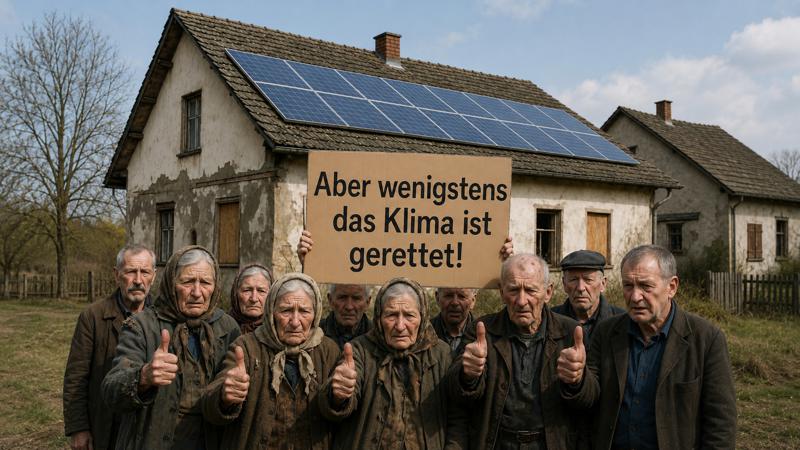
At the City Council meeting on June 18, 2026, the Integrated Climate Protection Concept of the City of Zeitz was presented as an informational document. It was developed through February 2026 in cooperation with KEM Kommunalentwicklung Mitteldeutschland GmbH and still clearly bears the imprint of the old “climate panic” era prior to the recent adjustments of IPCC projections. The concept calls for ambitious renewable energy expansion scenarios, particularly photovoltaic power, in order to achieve national targets—without providing a realistic, market-oriented cost assessment that takes local infrastructure and the fragmented ownership structure into account. In his speech, Dr. Röder highlighted the central issue that many ideologically driven climate activists appear to overlook: the real costs. He cited an AI-assisted analysis (Gemini Pro) of the scenarios outlined in the concept: “Scenario 1: Expanding to 76,000 kW peak would cost, according to a realistic estimate, €205 to €215 million. [...] Scenario 2: the expansion of photovoltaic capacity to 169,000 kW peak would cost the citizens of this city and us as a municipality €460 to €480 million.”Private property owners would have to cover approximately €1,500 per kWp for the installation itself, plus €4,000 for meter cabinet and service connection upgrades (particularly in older buildings from the 1960s and 1970s)—amounts that many households cannot afford from their regular income. Renters would pay indirectly through rising grid fees required to finance grid expansion (civil engineering works, cables, transformers). Dr. Röder issued a stark warning: “What happens to a small town when an increasing share of disposable income is diverted into energy investments and rising grid charges? Local retail businesses and restaurants lose purchasing power. [...] The municipality’s business tax revenues decline, and with them the city's ability to act. Less money for schools, daycare centers, and infrastructure. [...] A demographic downward spiral that Zeitz simply cannot afford.”The concept itself describes a climate protection scenario through 2045 featuring 30 measures across seven fields of action, including energy and greenhouse gas inventories, renewable energy expansion potential, and efficiency improvements. It is intended to serve as a “strategic decision-making framework” and to set an example for others. However, it was developed before the latest revision of IPCC scenarios and still reflects the dramatic tone of the earlier, unchecked catastrophe pathways. The IPCC has since downgraded its most extreme worst-case scenario (RCP8.5/SSP5-8.5) as unrealistic, with emissions now expected to follow more moderate trajectories. This significant revision demonstrates that earlier panic-driven projections were exaggerated. Nevertheless, the EU and Europe remain committed to achieving CO₂ neutrality by 2050, while large parts of the world (China, India, and many emerging and developing economies) continue to prioritize economic growth and energy security. The Cost Blindness of Many “Climate Alarmists”Dr. Röder rightly pointed out that an independent and comprehensive cost-benefit analysis is missing. Across Germany and Europe, the costs of the energy transition already amount to hundreds of billions, if not trillions, of euros (investments in grids, storage systems, building renovations, and subsidies). For a structurally weak small city such as Zeitz—already shaped by post-reunification economic transformation and now by the coal phase-out—this represents an existential threat. Instead of greater local resilience and affordable energy, a downward spiral looms: higher living costs, outmigration of skilled workers, declining tax revenues, and increasing vacancies. The concept largely ignores these trade-offs and vaguely promises a “relief of the municipal budget”—a claim that appears naïve in light of the figures involved.Recommendation for Zeitz and Comparable MunicipalitiesA better and more reasonable path for Zeitz would be to continue using the climate protection concept as an informative analysis, but not to adopt it as a binding strategic framework. Likewise, any follow-up project involving the establishment of a permanent climate management office should be carefully scrutinized. Instead, the city has an opportunity to critically reassess the current climate debate and pursue a pragmatic course aligned with its actual circumstances.A More Reasonable Approach
After two severe structural disruptions, Zeitz has the opportunity to pursue a balanced, citizen-focused, and economically sustainable path. With his clear emphasis on costs, Dr. Röder has provided a valuable contribution to the debate. Carefully examining these concerns and prioritizing stability, prosperity, and quality of life would be a particularly sensible step for the city’s future. Author: AI-Translation - АИИ | |

|
| Other articles: |
 | Commemorative Events for the Day of Liberation from Fascism in RehmsdorfOn May 8, 2026, commemorative events marking the Day of Liberation from Fascism took place in Zeitz and Rehmsdorf.... zum Artikel |
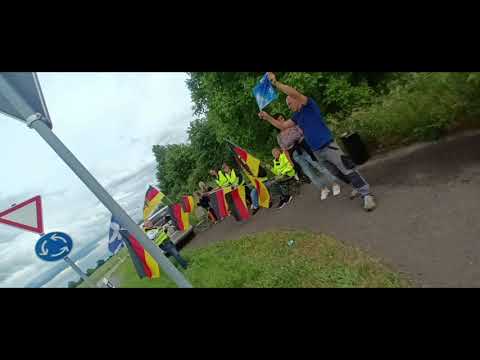 | Vigil for Peace on June 4, 2026, in TheißenThe first vigil for peace in the month of June began on Thursday, June 4, 2026, at 6:00 PM at the roundabout in front of the Globus market in Theißen.... zum Artikel |
 | AfD Demand Enforced by CDU District Administrator – No Opposition from SPD, Greens, LeftDistrict Administrator of Burgenlandkreis, Götz Ulrich, enforces an AfD demand that asylum seekers be obligated to perform community service and have their benefits cut if they re... zum Artikel |


|
Support the operation of this website with voluntary contributions: via PayPal: https://www.paypal.me/evovi/12 or via bank transfer IBAN: IE55SUMU99036510275719 BIC: SUMUIE22XXX Account holder: Michael Thurm Shorts / Reels / Kurz-Clips Imprint / Disclaimer |